What is DIY Investing? What are the pitfalls to avoid while investing by yourself?

DIY or Do It Yourself is a concept that catches people’s fancy and has been in trend for the past few years. It makes you feel resourceful and worthy of doing things on your own. DIY Investing is something we have all always been doing. We ask our friends/family/That CA uncle for the purpose of investing. Think of it like health. We all get sick but do we always consult a doctor? Not necessarily ! If you have a cut in your hand or cold, your grandmother comes up with a DIY remedy. However, you cannot use home remedies for all health issues.  Similarly, you can start investing on your own for small financial goals or with some basic amount. As it is always better to consult a doctor for your health concerns, it is always better to have a financial advisor on your side.  Where you want to do DIY Investing, let's understand the process of the same. 

The process of DIY investing:

DIY investing allows you to manage your own portfolios with  full control. However, it’s not an effortless process. You must follow a specific and pre-defined methodology towards DIY investing to achieve the expected returns and sufficiently lower risks. 1. Define your needs and objectives Every investor must have  an objective, a set of goals behind their investments. We all save and invest money to achieve our goals such as travelling, buying a car, buying a house etc. If nothing, then the basic objective of achieving wealth creation or financial freedom is a must for everyone. So before you start your investment it is important to pen down your goals along with the amount needed for that goal. You can learn more about this in this article here - Goal based investment. 2. Know your risk profile Now that you know the amount you need and when you need it, the next step is to understand your risk profile i.e. how you want to reach the amount that you need. You must understand how much risk you are comfortable taking to achieve your goals. A person with an aggressive risk profile has a higher risk taking capacity and can invest, say 80% of his savings, in equity whereas a conservative person would invest a lot less in equities. The idea is that you take only so much risk that allows you to sleep peacefully, invest consistently and have a smooth ride to achieving your goals. Know more about your risk profile and how it helps you invest better in this article - What is a risk profile? How to invest on that basis? 3. Understand your Investment Option The next step is to understand all the asset classes. You should know which asset  class is right for you and what are the risks and returns associated with it. You can enroll in our course-  NM 103: Basics of Asset Classes. This course is all about setting the base with learning about the Investment asset classes and what they do.   4. Allocate asset allocation Based on your risk profile, it’s time to put your money to work. For example,  if you are of growth profile invest 70%% of your investment in Equities and 30% of your investment in Debt. A proper asset allocation is what will determine most of your gains rather the selection of the best equity share. 5. Construct plans and strategies After you have gathered and analyzed enough information  the next move is to develop ideas, plans, and strategies in line with their goals.  The plans include how much to invest each month, selection of financial instruments to invest in, tax considerations, and developing an investment strategy. The strategies can either be focused on growth, value, income, or a combination of all based on individual needs and priorities. 6. Implementation of the Plan & Strategy The plans and strategies are then implemented in the most practical manner possible. DIY investors might need to try various strategies before settling for one. Even after implementation, it is necessary to keep monitoring and evaluating the investment strategies and make changes as and when needed.

Pitfalls of DIY investing:

1. Lack of research and Professional Advice DIY investing may seem appealing, but the knowledge and experience of professional financial advisors  cannot and should not be ignored. It takes years  of experience to understand the market. You as a DIY investor will not be that skillful to handle your portfolio in every situation, especially when the markets are volatile. Everytime you believe this is it - there is something completely new that happens to be market and you will have to change your strategy. 2. Needs a lot of time Investing demands a lot of research and monitoring of your portfolio. You need to learn about your investment products, various asset classes, their features, risk & return, market scenario, global market conditions, its impact on your investments, how you should make a decision etc. Even when you consult someone to invest for you - it is very important you understand the basics of Investing. You can check our course for the same - Namaste Money. We start this course with a blank slate and handhold you through each concept as you baby step your way into finances. By the end of this course, you will be a better DIY money manager and investor. 3. Fear & Greed Emotions play an important role while investing. While you are investing on your own your fear or greed can oppose your investment strategy. Whereas, the financial advisor will not ask you to take decisions that are influenced by emotions.  Check out  our blog: What is loss aversion bias in investing? 4. Lack of monitoring DIY investing isn't just about doing your homework prior to making an investment. It is an on-going process. It is essential to monitor your investments. For example, if you are invested in a mutual fund, you need to check a few factors, for example what if the fund manager changes? You need to be updated with your investments. 5. Not rebalancing Investing isn’t a one-time exercise. You need to review and  rebalance (where necessary)it at least once a year. Check out our blog: Smart investing: Time to re balance your investment portfolio

Wealth Café Advice:

Anyone can be a DIY investor. But not everyone will succeed. Where you have the time and ability to do the skills required to invest on your own, DIY Investing can be fun and would save you the cost as well. Do note that finance is a continuous learning process. Where you are just investing based on tips and recommendations and calling it DIY investing, then it is better to seek professional advice and let someone else do it for you. You can reach out to us at iplan@wealthcafe.in.  If you want us to manage your investment, you can learn more about us at ria.wealthcafe.in and reach out to us.

    Get your weekly dose of Money Masala from us.


    Pay taxes on Mutual funds - Unrealized vs Realized Gains

    Whether you are putting money away for a rainy day, retirement or anything in between, you are likely to be taxed. Investors do not think about tax expenses when making investment decisions, even though it is one of the crucial aspects of investing.

    Do you check pre tax and post tax returns before you invest your money ? Do you know how fixed deposits and debt mutual funds investments can impact your tax differently? Let's discuss how the difference in taxability of Debt Mutual Funds versus Fixed deposits becomes one of the factors you must consider when you make an investment decision.

    Difference between realized and unrealized gains in a mutual fund.

    Realized gains are the returns you make after actually redeeming(selling) your mutual funds. Unrealized or notional gains or losses are the ones which you see based on everyday market movements but do not book it. Unrealized gains only exist on paper and results from an investment which has yet not been sold.

    Taxation of gains

    Where there are unrealized gains - no tax is payable as you have not booked any profits. Only in case of realized gains, do you have to pay taxes in case of a mutual fund. So once you sell your Mutual funds and the funds are credited to your bank account, you have to compute your tax liability and pay capital gains taxes on the same.

    To know more about the taxability of mutual funds, check here - Taxation of Mutual Funds for FY 2021-22 (AY 2022-23).

    It is not that every other asset class, you pay taxes on actual basis, in fact in a fixed deposit, you pay taxes on interest accrued to you, even where the same is not credited to your bank account each year. This way Fixed deposit income is taxed differently as compared to debt mutual funds (because the gains are taxed only on realisation) 

    Let's take an example to help you explain how tax eats into your profits.

    For the purpose of this example, we shall consider that the returns from fixed deposits and debt mutual funds are the same. They will be taxed as per the relevant tax laws and how that would impact the net returns you can make from the investment. 

    Ria is the investor and she falls under the 20% tax bracket. She has made an investment of INR 10 lakhs in FD and debt mutual funds for 3 years, giving a return of 8% per annum.

    https://financial.wealthcafe.in/blog/2021/06/cost-of-inflation-index-fy-2021-22-ay-2022-23-for-capital-gain/

    In case of FD, interest will accrue to her every year, and she has to pay taxes on the same as per her slab rate every year, even where the same is not credited to her bank account. Infact, the interest after the taxes are paid will be reinvested.

    FD = INR 10,00,000

    Interest - INR 80,000

    Tax - 16,000

    Reinvestment of Interest in year 1 = 64,000

    (same reinvestment would happen in year 2 and year 3 - after tax)

    After 3 years: 

    Total tax paid - INR 48,000

    Net cash in hand = INR 12,04,288


    In case of debt mutual funds, she will have to pay taxes only on realization of profits. She decided to sell the same after 3 years and will have to pay long term capital gains on the same at 20% (with indexation benefits). So effectively, the tax she has to pay is less than what she had to pay for her fixed deposits. Also, the reinvestments would be of the entire earnings and not just post tax earnings in case of fixed deposits.

    Amount invested - INR 10,00,000

    Gains = INR 80,000

    Tax - Nil (No sale)

    Reinvestment of gains = INR 80,000*

    After 3 years

    Total Tax Paid - INR 32,565 (indexation benefit)

    Net cash in hand - INR 12,27,147

    *the returns are not assured in a debt mutual fund. We have considered this for explanation purposes here.


    From the above example, you can understand that the net cash in hand that ria would earn is 102% of the final amount from fixed deposits. Infact, if she was in the 30% tax bracket, she would make 104% more in the case of debt mutual funds than fixed deposits.

    This is how realized and unrealized gains impact your tax in various asset classes and also become one of the factors that one must consider when they are investing their money.

    You can also check our blog on -Why you should avoid investing all your money in a FIXED DEPOSIT?


    Wealth Café advice: 

    Please note that tax is not the only but one of the criteria that one must look at when investing their money in debt funds and Fixed deposits. Fixed deposits are safer and provide assured returns as compared to debt mutual funds. Debt mutual funds have many types and each has a different risk parameter. You can look at the liquid funds, or ultra short duration debt funds for lower risk and comparable returns to Fixed deposits. Please note that returns in all debt mutual funds are volatile and invest in them only after considering all the possible risks.

    Check our course- NM 104: Basics of Mutual Funds - to learn more about Mutual Funds in detail.


    Disclaimer: - The articles are for information purposes only. Information presented is general information that does not take into account your individual circumstances, financial situation, or needs, nor does it present a personalized recommendation to you. You must consult a financial advisor who understands your specific circumstances and situation before taking an investment decision.

    What is a Risk profile? How to Invest basis that?

    Many young investors tend to invest on peer pressure or because someone asked them without understanding why they want to invest and how they should invest.

    There is only one answer to your ``Where to invest?”, “How much to Invest”. “When to sell” ? “How to get started?” i.e. risk profile.

    What is a risk profile?

    There is a risk associated with everything that you do in life. Whether it is a choice of the college that you want to study in  or the employer you decide to work for; everything that you do in life is associated with a certain amount of risks with anticipation of some return. Even your relationships have the risk - return associated with it.   Your investments are not any different, there is a risk - return relationship there as well. Every investment has an underlying risk and hence, you earn a return on the same. Hence, you must invest based on your risk profile - i.e. your risk taking capacity which basically means - How much risk are you okay to bear  in order to earn your desired returns. 

    Technically speaking, Risk profile is an analysis of your risk appetite in different situations. Every individual has a different tolerance of risk based on their age, income, financial stability, etc 

    Your risk taking capacity (risk profile) is a function of two things:

    1. Your ability to take risk ( Depends on your age, amount of wealth and urgency of goal)
    2. Your willingness to take risks (Depends on your wealth, life experience and your profession.)

    Remember the fundamental rule of investing:

    High Risk = High Returns

    Low Risk = Low Returns

    You can learn more about what investment risk is from our YouTube video here - https://www.youtube.com/watch?v=3pl5IIldDFE 

    Use our risk calculator tool to view your investment risk level. Find out your risk profile, estimate financial risk-taking capacity and understand your (psychological) risk tolerance level . This will help you know your asset allocation i.e. your Debt: Equity mix which will help you derive how much you should invest in each asset class.

    You must know the risk of your investments and then you must align your risk taking capacity with the underlying risk of the investments so you can sleep peacefully at night while your money is growing for you.


    Here are the most common risk profiles for investors: 


    SR No Risk Profile Meaning Percentage in Equity(Return = 15%) Percentage in Debt(Return = 8%) Expected Return
    1 Aggressive Willing to take significant risk to maximize return over long term 90% 10% 14.3%
    2 Growth Seeking maximum return over medium to long term with high risk 70% 30% 12.9%
    3 Balanced Seeking for relatively higher  returns over medium to long term with moderate risk 50% 50% 11.5%
    4 Conservative Willing to take small level of risk for potential returns over medium to long term 30% 70% 10.1%
    5 Defensive Seeking safety of capital, minimal risk and/or low return 10% 90% 8.7%


    Why to invest based on a risk profile?

    It is very convenient to invest based on a random recommendation or a tweet or a telegram post. But does that really work for you? Does it give you the desired results needed to achieve your goals? Does it answer your question of how much to buy and when to sell? Such recommended buys are only half baked - Let me share an example with you, one of our Instagram followers had messaged us about her investment journey. Tanya (name changed) was a college graduate and had an urge to invest her internship stipend. It was a good initiative of her to invest from an early age; however due to lack of knowledge she invested in small cap mutual funds as her friends suggested, initially it was doing very well. Now given that she was a college graduate and was investing her only pocket money savings - small cap funds were a very risky investment for her. But she did not know this and invested all her savings in that. . Sadly after a year the market crashed in March 2020 and she faced more than  50% loss in her portfolio, and she sold all of them in panic. This is not Tanya's story but everyone’s. We are sure that at some point in time, you would have also bought and sold purely based on recommendations and regretted those decisions later.


    Further, we learn from this instance that if she would have diversified her portfolio based on her risk appetite, she wouldn’t have faced so much loss and would have in fact more money eventually because she would have continued to invest with the market loss. 

    I have written a detailed blog on my personal investment journey where I invested based on my risk profile and how I made over 28% gains from my portfolio. https://financial.wealthcafe.in/blog/2020/03/how-am-i-investing-in-current-times/ 

    As an  investor, your risk profile will help you plan your investments as per your risk bearing capacity so that in any worst-case scenario, you will never lose beyond your capacity. Hence, the benefits of the same are: 

    • It helps you in taking the right risk as per your willingness and ability.
    • Selecting the right asset class in check with your goal and risk profile, so that you have a perfect balance of rewards and risk in your portfolio.
    • It helps to keep your emotions away from your trading decisions.

    Read our article to understand how to invest based on risk profile: https://financial.wealthcafe.in/blog/2021/10/monthly-sip-for-higher-education/ 

    Wealth Café Advice

    Risk profiling is very important for every investor. Any investment planned without a risk profile analysis can lead to severe financial problems. However, with changing priorities and responsibilities your risk profile will change. For instance, the kind of risk you were willing to take at 20 may not appeal to you at age of 45. Therefore, revisit your risk profile every year when you are reviewing your portfolio. This will help to benchmark your risk tolerance without much hassle. To understand this better you can even seek financial advice  from a registered investment advisor.  You can reach out to us by filling this google form or at iplan@wealthcafe.in We are SEBI registered investment advisors and can help you make sound investment decisions. You can read about our advisory services at ria.wealthcafe.in

    Disclaimer: - The articles are for information purposes only. Information presented is general information that does not take into account your individual circumstances, financial situation, or needs, nor does it present a personalized recommendation to you. You must consult a financial advisor who understands your specific circumstances and situation before taking an investment decision.

    DEEP CLEAN YOUR PORTFOLIO THIS DIWALI

    Bursting crackers, playing card games, or decorating the house--a lot of customs are associated with the festival of Diwali. And among those typical Diwali rituals, there is one aspect that is generally overlooked – cleaning and decluttering!

    Deep cleaning of our houses for Diwali has been an age-old custom. Most families go through similar rituals during this time – they clean every nook and cranny of their houses and yards several days before Diwali arrives. So, why is it so important to deep clean?

    Let me tell you,

    It helps you to declutter your mind, it just relaxes you the way many 2 therapy sessions would (or not). You just have this dopamine rush of completing some tasks. And also, it's great to be in a house that is dust-free and has more space.

    Take stock of everything: It helps you understand what you have and how much. Take a stock of everything you own - clothes, books (I found some great books I got and I haven't read yet, finishing it before the year ends), home decor, candles, and shoes (omg not used them for 2 years now).

    Discard all that you don’t need - Simple rule - what you don't use please discard. I am everything but a hoarder and I love my mother for this. If I don't use something, I discard it and then I buy less of things I don't want to use because discarding them is extremely painful. Thus, becoming a smart shopper. I do not decide after shopping, I decide before shopping.

    No mindless Diwali/Festive Shopping - Ugh I hate it when people buy things just because it is Diwali. Yes, it was great when you did that only once a year. But now we are shopping literally all the time. We always have Myntra or Amazon tabs open on our phones. Hence just shop what you want or don't shop.

    Set budgets - Diwali is all about budgeting guys. Look closely, you will see savings everywhere but Marketing is only showing Spending more.

    Now that we have touched on the budgeting topic, let us talk more about finance with the whole deep cleaning idea. This deep cleaning is not just limited to your wardrobes and homes but also can be extended to your portfolio. Take this opportunity to deep clean your Portfolio

    Ways to Deep Clean your Portfolio

    Collect all the data about all your investments, this is the most time-consuming process if you have not been maintaining it properly. But it is totally worth it, you can also check Mprofit software to maintain your investment information. It is available for free for up to 50 lakhs portfolio value.

    Now check your asset allocation - How much you have in debt, equity and gold. If you have money in real estate for investments (not the house you live in) then add that too. Know how much % you have in each of these asset classes.

    Rebalance or reallocate your Investments as per your risk profile or ideal AA. If you are a regular reader you must know what is your risk profile and ideal asset allocation, for the new bees - check out this blog - One size does not fit all! and our risk calculator to compute your risk profile. 

    Once you know your risk profile, compute your ideal allocation and then compare it with what you already have. Rebalance your portfolio to achieve your ideal allocation. These are some ways to achieve your required asset allocation.

    Declutter your Mutual Funds - When we are talking about decluttering, remember that one of the first things to do is to stop hoarding on mutual funds, buying every other mutual fund is going to make your portfolio messy, and having too many things of one type is only making your diversification worst. So ensure that you have 5 to 6 mutual funds and not more than that and have 1 fund in each category. Time to declutter your mind, wardrobe, and portfolio.

    Read the following article to understand this in more detail - 

    How many mutual funds should you have?

    When to exit from a Mutual Fund or a SIP

    So remember, let it be cleaning your house or your portfolio, both ways you would be welcoming more Laxmi in your life 🙂

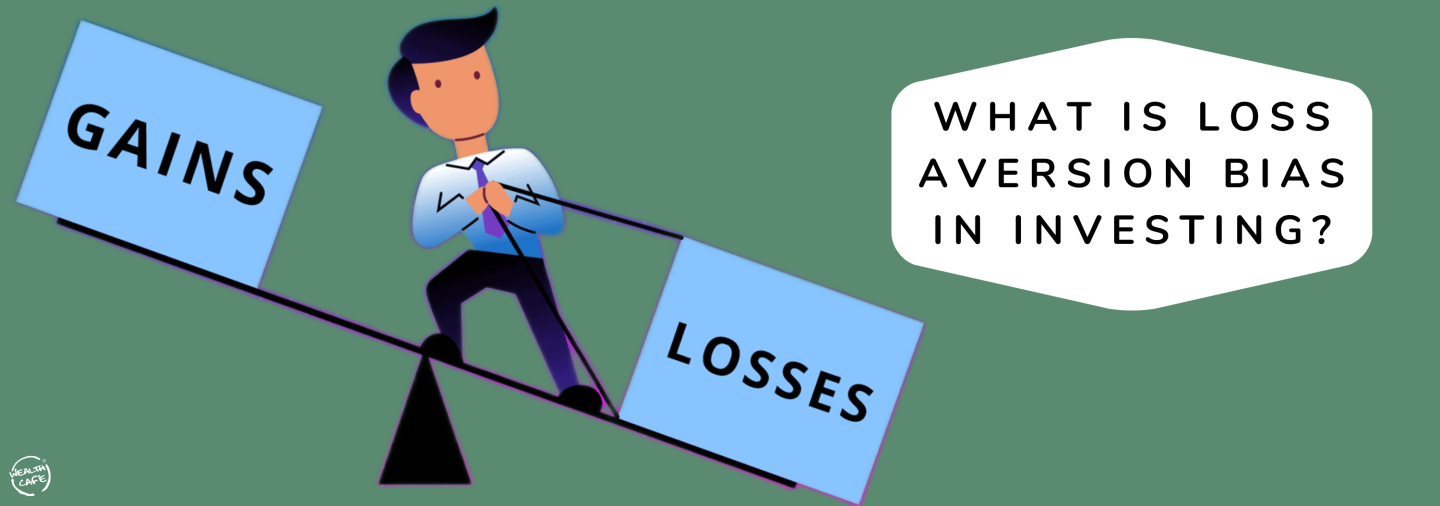
    What is loss aversion bias in investing?

    Loss aversion is a tendency in behavioral finance where investors are so fearful of losses that they focus on trying to avoid a loss more so than on making gains. The more one experiences losses, the more likely they are to become prone to loss aversion.

    For instance, say you bought 100 shares of Yes Bank at Rs 50 per share. If the stock fell to Rs 30, and you bought another 100 shares, your average price per share would be Rs 40.  If the stock further fell to Rs 15, and you bought another 100 shares, your average price per share would be Rs 30. And if you now feel the need to sell, you would be facing a loss of approx 53%. (We have taken this only for an example purpose, no recommendation or fundamental is done for the stock)

    Purchasing more shares to average down the price wouldn't change that fact, so do not misinterpret averaging down as a means to magically decrease your loss. This is a very common practice followed by investors where they keep buying more shares at the dip, thinking they are lowering their cost, without understanding that they are just incurring more losses. Such methods of buying at a lower cost must be followed only and only where the company has strong fundamentals and you are sure that the current dip in the price is due to some change in the market scenario. If the losses continue, then do you think buying more is the solution or booking your losses is?

    Research on loss aversion shows that investors feel the pain of a loss more than twice as strong as they feel the enjoyment of making a profit.

    EXAMPLES OF LOSS AVERSION

    Below is a list of loss aversion examples that investors often fall into:

    • Investing in low-return, guaranteed investments over more promising investments that carry a higher risk
    • Not selling a stock that you hold when your current rational analysis of the stock clearly indicates that it should be abandoned as an investment
    • Selling a stock that has gone up slightly in price just to realize a gain of any amount, when your analysis indicates that the stock should be held longer for a much larger profit
    • Telling oneself that an investment is not a loss until it’s realized (i.e., when the investment is sold)

    HARMFUL EFFECTS OF LOSS AVERSION

    • Loss aversion causes investors to hold on to loss-making stocks or funds for a very long period. They refuse to sell a stock or fund at a loss and can hold on to it for long periods of time even if there are better alternative investment options available.
    • Aversion for losses makes investors hold on to loss-making stocks or funds till the loss is recovered. Ultimately, when the investor sells the stock or fund, a long time may have elapsed and the return on the investment is very low.
    • There are also instances of investors holding on to loss-making stocks/funds and then finally selling them at a much bigger loss than what they would have incurred if they sold earlier.
    • Loss aversion is commonly seen in property / real estate investments. Investors refuse to sell their property at a loss and hold on to it hoping the investment will turn profitable someday. Throughout the holding period of the investment, they pay interest on their loans which could have been avoided if they sold earlier.

    RATIONAL STRATEGIES FOR AVOIDING LOSSES
    Let’s look at some examples of how a company or an individual can reasonably minimize risk exposure and losses:

    • Hedge an existing investment by making a second investment that’s inversely correlated to the first investment
    • Invest in endowment plans/debt products that have a guaranteed rate of return so you have your safety net in place
    • Invest in government bonds directly or via mutual funds (but be aware of the liquidity and the interest rate risk over there)
    • Purchase investments with relatively low price volatility and only after thorough research. Do not just buy because something is priced low. Understand the value of it before investing.
    • Consciously remain aware of loss aversion as a potential weakness in your investing decisions and make more conscious smart decisions.
    • Invest in companies that have an extremely strong balance sheet and cash flow generation. (In other words, perform due diligence and only make investments that rational analysis indicates have genuine potential to significantly increase in value.) and DO NOT MAKE INVESTMENTS BASED ON TRENDING TWEETS AND TELEGRAM GROUPS.

    CONCLUSION
    No one likes to make a loss, but loss aversion can cause you to lose more money or make less money than what you feared to lose. Sometimes, it is better to book a loss and move on to alternative investment options. This moving on will help you invest for the long term better and make money eventually. 

    It is difficult to separate emotions from investing, but successful investors are able to do it. You should do what is right to meet your financial goals including selling funds that are underperforming consistently and switching to better funds. A good financial advisor can help you overcome this behavioral bias. You should have a rational and objective portfolio performance evaluation process; take the help of a financial advisor if required. We are SEBI registered investment advisors and can help you make sound investment decisions - you can reach out to us at iplan@wealthcafe.in, in order to help you make a financial plan for yourself.

    Article Headers (10)-min

    What is information bias in investing?

    Information bias is the tendency to evaluate information even when it is useless in understanding a problem or issue. Today, investors had much more information than before, however, is it all good information? Can this be used to make smart money decisions?

    Through social media, we are now being bombarded with new information almost every hour and sometimes every few minutes. Are you one of those who feel research means checking reels on top 3 funds to buy? Checking Youtube videos to confirm your understanding of various investments? Following twitter handles or paying 199 per month for telegram groups to know what is the next multi-bagger? Social media stalking is not detailed research that provides you all the information you need to make a smart investment decision. 

    Where you are following people online who agree with your viewpoints and speak the things you believe in - you are already following an information bias. 

    INFORMATION BIAS IN INVESTING
    You should ask yourself if some of the information you are getting is relevant at all. Information like daily NAV movement, 52 weeks high or low NAVs, best performing funds of the month, etc. is useless in our view. Should you buy or sell a fund based on its last 7 days or 30 days' performance? However, with interesting captions, they are made to look as if it is very important information that you should pay attention to. But mostly they are irrelevant but excites you into buying a particular fund purely on its return number or performance of the past few months. In many instances, investors will make investment decisions to buy or sell an investment on the basis of short-term movements in the share price. 

    Likewise, for mutual fund investors, top stocks bought or sold by fund managers every month is mostly not relevant. When you are investing in mutual funds, you rely on professional fund managers to do the stock selection because you do not have their expertise or experience. Top stocks bought or sold by fund managers can be an interesting article on the internet but should you invest in Direct Equity shares based on what a Mutual Fund manager is buying or selling?

    The input of information has increased tremendously, now we have people dancing and explaining financial concepts on the net where capturing that information is easy and fun, we may miss out on the crux of the whole thing when learning about finance i..e it is very personal to you. You need to understand what works for your risk profile and your goals before investing in purely basis blogs/videos and others.

    HOW TO AVOID INFORMATION BIAS

    • Financial planning: Financial planning with clearly defined financial goals and investment plans to achieve different goals can help you avoid information bias. Make sure that you are committed to your financial plan.
    • Know the fundamentals of investing: Know what is important and what is not. You need to understand what will make your financial goals successful and filter out the unimportant information.
    • Do not track your portfolio on a daily basis: It is important to monitor your portfolio regularly, but you do not need to track it on a daily basis. Short-term price movements have no impact on long-term portfolio returns. If you track your portfolio on a daily basis, then you are likely to be prone to information biases. Remember why you invested and for what goals. You must invest in equity for the long term - so checking it every day is not going to help get higher returns.
    • Seek counsel before you react to information: Information that you get every day or every hour usually has no bearing on long-term portfolio performance. If you want, you can seek more information about investments, but seek the guidance of a financial advisor before you act on the information you have. We are SEBI registered investment advisors and can help you make sound investment decisions - you can reach out to us at iplan@wealthcafe.in, in order to help you make a financial plan for yourself. A lot of information you get daily may be totally irrelevant and can harm your financial interests, if you act on it without considering other factors.

    RBI Retail Direct – Invest in Government Bonds online

    Using the RBI Retail Direct platform, we can now invest in Government Bonds online. In the month of February 2021, RBI announced that it will allow retail investors to directly buy and sell Government Bonds online. Now through the RBI Retail Direct scheme, we can invest in Government Bonds online.

    The launch date of the portal is not yet decided. According to the notification, “the date of commencement of the scheme will be announced at a later date”.

    These are the securities which investors can invest: 

    1. Government of India Treasury Bills 
    2. Government of India dated securities 
    3. Sovereign Gold Bonds (SGB) 
    4. State Development Loans (SDLs)

    ELIGIBILITY

    Retail investors, as defined under the scheme, will be able to register under the Scheme and maintain an RDG Account, if they have the following:

    i) Rupee savings bank account maintained in India;

    ii) Permanent Account Number (PAN) issued by the Income Tax Department;

    iii) Any OVD for KYC purpose;

    iv) Valid email id; and

    v) Registered mobile number.

    Non-Resident retail investors eligible to invest in Government Securities under Foreign Exchange Management Act, 1999 will also be eligible under the scheme. The RDG account can be opened singly or jointly with another retail investor who meets the eligibility criteria.

    SCOPE OF THE SCHEME

    ‘RBI Retail Direct’ is a comprehensive scheme that will provide the following facilities to retail investors in the government securities market through an online portal:

    i) Open and maintain a ‘Retail Direct Gilt Account’ (RDG Account)

    ii) Access to primary issuance of Government securities

    iii) Access to NDS-OM

    WHAT ARE THE SERVICES OFFERED?

    The registered investors can opt for the following investment services: 

    a. Financial Statement: The link provides transaction history and the balance position of securities holdings in the Retail Direct Gilt Account. All transaction alerts will be sent by e-mail or SMS. 

    b. Provision for nominations: You can fill up and upload the nomination form in the appropriate format, which must be signed. A maximum of two nominations is allowed. 

    c. Pledges and liens: Securities held in the RDG Account will be available for pledge/lien.

    d. Transfers of Gifts Retail Direct: Investors will be able to give government securities to other Retail Direct Investors through an online platform. 

    e. Grievance redressal: Any query or grievances related to the ‘Retail Direct’ Scheme can be raised on the portal which will be handled/resolved by Public Debt Office (PDO) Mumbai, RBI.

    REGISTRATION:

    Investors can register on the online portal by filling up the online form and using the OTP received on the registered mobile number and email ID to authenticate and submit the form. On successful registration, a ‘Retail Direct Gilt Account’ will be opened and details will be given through SMS/e-mail to access the online portal. The RDG account will be available for primary market participation as well as secondary market transactions on NDS-OM.

    PROCEDURE

    After registering on the online portal, retail investors will need to authenticate themselves by using OTP (one-time password) received on their registered mobile number and email address. They will need to submit the KYC document to open the RDG Account.

    BUYING AND SELLING

    During the bidding, the participation and allotment of securities will be as per the non-competitive bidding scheme of the RBI. The regulator has designed a non-competitive bidding scheme for non-institutional small buyers.

    Once investors make the payments, RBI will credit the securities to their RDG Accounts.

    To buy and sell securities in the secondary market, the procedure is similar to buying and selling of shares.

    Before the start of trading hours or during the day, the investor must transfer funds to the designated account of CCIL (Clearing corporation of NDS-OM) online.

    Based on actual transfer, a funding limit (buying limit) will be given to the investor for placing ‘buy’ orders. At the end of the trading session, any excess funds will be refunded.

    FEES AND CHARGES

    There are no fees charged for opening or maintaining the RDG account nor for Submitting bids in the primary auction. However, the registered investor will have to pay fees for payment gateway, etc. that are applicable.

    However, do remember one thing that even though in such Government securities, default or downgrade may not be there, they are highly sensitive to the interest rate movement based on the time horizon of maturity of the bond.


    Hence, investing in such Government securities does not mean they are safe. If you buy today and try to sell tomorrow (before maturity), then the risk of interest rate movement will be there. DO REMEMBER THAT INVESTING IN BANK FIXED DEPOSIT IS DIFFERENT THAN INVESTING IN GOVERNMENT BONDS. Understand the features and how they fluctuate and accordingly based on your need, you can buy. 

    Where you do not wish to invest directly in government bonds as liquidity can be a concern here. Please note that RBI bonds are not as liquid as equity shares (where you are able to sell your equity shares anytime you'd like), there could be a situation where you do not find a buyer immediately, in that case, you must be ready to hold on to bonds for a longer duration. So where you want exposure to government bonds but not directly, mutual funds are the way forward for you.

    [mc4wp_form id="2150"]

    WCafe Financial Services Pvt Ltd (formerly known as Wealth Cafe Financial Services Pvt Ltd) is a AMFI registered ARN holder with ARN-78274.

    WCafe Financial Services Pvt Ltd (formerly known as Wealth Cafe Financial Services Pvt Ltd) is a SEBI registered Authorised Person (sub broker) of Sharekhan Limited with NSE Regn AP2069583763 and BSE Regn AP01074801170742.

    Copyright 2010-20 Wealth Café ©  All Rights Reserved