Article Headers (6)

Benefits available to government employees

Have you ever wondered why people in our country still crave to get into a government job despite the swanky workplaces as well as the high-end lifestyle offered by the private sector?

Well, the answer lies in the numerous benefits which a government employee is eligible to avail. A government employee not only enjoys high prestige in the society but also other benefits such as job security, fixed working hours, paid holidays, retirement benefits, and most important of all various tax benefits on his salary as compared to a non-government employee.

Let me take you through the prominent differences in the tax implications on the Salary Income of a private sector employee as compared to a Government Employee. It includes the treatment of various incentives, retirement benefits, or deductions received by employees of both sectors. We will discuss all these benefits one by one in detail. Let’s begin.

Firstly, we will start with the salary benefits available to Government employees :

SALARY BENEFITS

Dearness Allowance (DA):

Dearness Allowance (DA) is an allowance paid to government employees as a cost of living adjustment to cope with inflation. It has hiked from the existing 17% to 28% percent of the basic pay for central government employees and autonomous bodies from July 2021.

DA paid to employees is fully taxable with salary. The Income Tax Act mandates that tax liability for DA along with salary must be declared in the filed return.

DEDUCTION FROM SALARY

Entertainment Allowance:

The deduction on this allowance is allowed only to a Government Employee. That means the non-government employees shall not be eligible for deduction if an entertainment allowance is received by them.

The deduction from the gross salary of the government employees shall be a minimum of the below three limits :

  1. Actual entertainment allowance received
  2. 1/5th of salary exclusive of any allowance, benefit, or perquisite.
  3. Rs. 5000

Foreign allowances :

Foreign Allowances or perquisites paid or allowed only to Government Employees posted outside India are fully exempt from tax.

Allowances to members of UPSC :

The serving Chairman or Member of UPSC is given the following tax-free allowances and perquisites:

  1. Value of rent-free official residence
  2. Value of conveyance facilities including transport allowance
  3. Sumptuary allowance (This allowance is provided to the members of honorary posts for daily expenditures.)
  4. Leave travel concession

Further, if allowances are provided to Retired Chairman/Members of UPSC then the tax exemption shall be up to Rs.14,000 per month for offering services on a contract basis.

Allowances by UNO :

Allowances paid by the UNO to its employees are also exempt.

Allowances to Judges :

Allowances paid to Judges of the High Court or Supreme Court are exempt from tax. Eg - The compensatory Allowance is exempt.

Allowances to SAARC member states:

Salary, as well as allowances received by the professors from SAARC member states, are also exempt.

RETIREMENT BENEFITS

Gratuity

It is a part of salary which you receive as an appreciation from your employer for the services offered to the company. You are eligible to receive gratuity only if you have rendered services for 5 continuous years or more to the organisation.

The amount of Gratuity received is fully exempt from tax

Pension 

With time, only you retire but your tax does not!! Tax will always be levied till the time a person earns Income irrespective of age. A pension is a payment made by the employer at the time of retirement as a reward for a past service. There can be two types of pension. The brief description is as under:

  1. Uncommuted Pension: If the Pension is received periodically i.e. on monthly basis then it is fully taxable in the hands of both government as well as non-government employees.
  2. Commuted Pension: It refers to a lump-sum pension payment received in place of periodic pension. The taxability has been defined under the income tax act:
    The amount received is fully exempt from tax

Leave Encashment

Every organisation grants certain leaves to its employees and these leaves, if unused, can either be carried forward or are lapsed at the end of the year. You can encash the unused accumulated leaves, depending upon the policy of the company either during the time of employment or at the time of retirement.

Tax Treatment of Leaves encashment :

Received during employment: Where the leaves are encashed during the period of employment, it is fully taxable for the government as well as non-government employees.

Received at the time of retirement: The amount shall be fully exempt for government employees.

The numerous tax benefits enjoyed by the government employee could be one of the reasons which give them an edge over the non-government employee. However, the job content and job satisfaction should be equally evaluated before deciding upon the organisation you wish to work for.

    Get your weekly dose of Money Masala from us.


    LTA related questions

    As the name itself suggests, it is an exemption for allowance/assistance received by the employee from his employer for travelling on leave. Though it sounds simple, many factors need to be kept in mind before planning the trip to claim an LTA exemption. Income tax provision has laid down rules to claim exemption of LTA.

    Frequently Asked Question

    Q1. How much can I claim tax exemption in Leave Travel Allowance or LTA?

    A. The amount of LTA exemption depends on the LTA component in your compensation package or CTC. You can furnish proof of travel within the block period and claim up to the amount prescribed in your CTC.

    Q2. What is the latest block period to claim LTA exemption?

    A. The latest block period of four years is from 1 January 2018 until 31 December 2021.

    Q3. How many trips can I make in one year to claim the exemption?

    A.You can claim LTA exemption only for one trip in one calendar year.

    Q4. Can we carry forward unclaimed LTA?

    A. Yes. An employee can carry forward one trip to the next block year. This means in 4 block years, he can claim one trip and one trip he can carry forward to the next block year. During the next block year, instead of 2 trips, they can undertake 3 trips and claim LTA benefits. However, this has to be communicated to an employer so that they can make provisions in their books.

    Q5. Can I claim an LTA benefit for the travel costs of my family?

    A. You can claim LTA benefit for the travel costs of yourself, your family consisting of your spouse, children, dependent parents, brothers, and sisters of the employee.

    Q6. How many kids are eligible to travel to get an LTA benefit?

    A. 2 kids are eligible to travel to get LTA benefits. In case there is a triplet kid, due to twins, such twins would be considered as one kid for this purpose.

    Q7. If an employee does one trip but visits multiple places, is he eligible to claim LTA?

    A. The income tax rule indicates that LTA can be claimed for the shortest distance between the starting point and farthest point. In between, if there are more places to visit, you can do that.

    Q8. Can I claim LTA by travelling abroad?

    A. LTA can be claimed for travel taken within India. You cannot claim foreign trip expenses for LTA benefits.

    Q9. What mode of travel is eligible for claiming LTA?

    A. In the case of air travel, economy class is eligible.

    In the case of train travel, up to the first AC is eligible.

    In the case of road transport, a rented vehicle/bus of any kind is eligible to claim LTA benefit.

    Q10. If an employee travels at the end of the year and returns from a trip which falls beyond 31st Dec, how does it work?

    A. In such cases, employees need to consider the starting date as a basis and claim for that calendar year.

    Q11. If an employee travels at the end of the block year and returns from a trip after 31st Dec which falls in a different block year, how does it work?

    A. Block year for the current LTA period is from 1-Jan-2018 to 31-Dec-2021. Assume that you want to claim your 2nd LTA amount and plan your trip from say 25th Dec 2021 to 5th Jan 2022. Since 1-Jan-2022 onwards is a different block period, you can still claim this trip under the 2018-2021 block period.

    Q 12. I missed submitting my first LTA claim in a block year. Can I submit 2 LTA claims in a block year later?

    A. As per IT Rules, an employee needs to claim 2 trips LTA in a block of 4 years. However, if you have missed a claim in the first 2 years, you need to indicate this to your employer, so that they can carry it forward to the subsequent 2 years of the same block year. You can later submit the bill of the first 2 years (bill date should indicate that) and claim it. However, you cannot claim 2 trips expenses in the subsequent 2 years of a block period (with bill dates of the 3rd and 4th year of a block period).

    Q13. Do I need to submit a single bill for our trip or multiple bills would be accepted for LTA?

    A. LTA benefit is given for a trip. This means, one family is travelling. Ideally, there would be one bill. However, there are cases where multiple bills would be received for a single trip (for airfare bills, where a family member agreed to join later and the booking was made later, but the travel date is the same for the remaining members). In such cases, these are agreed upon by employers. It would be better to check with your employer in such circumstances before proceeding further.

    Q 14. How can we claim LTA even without travelling?

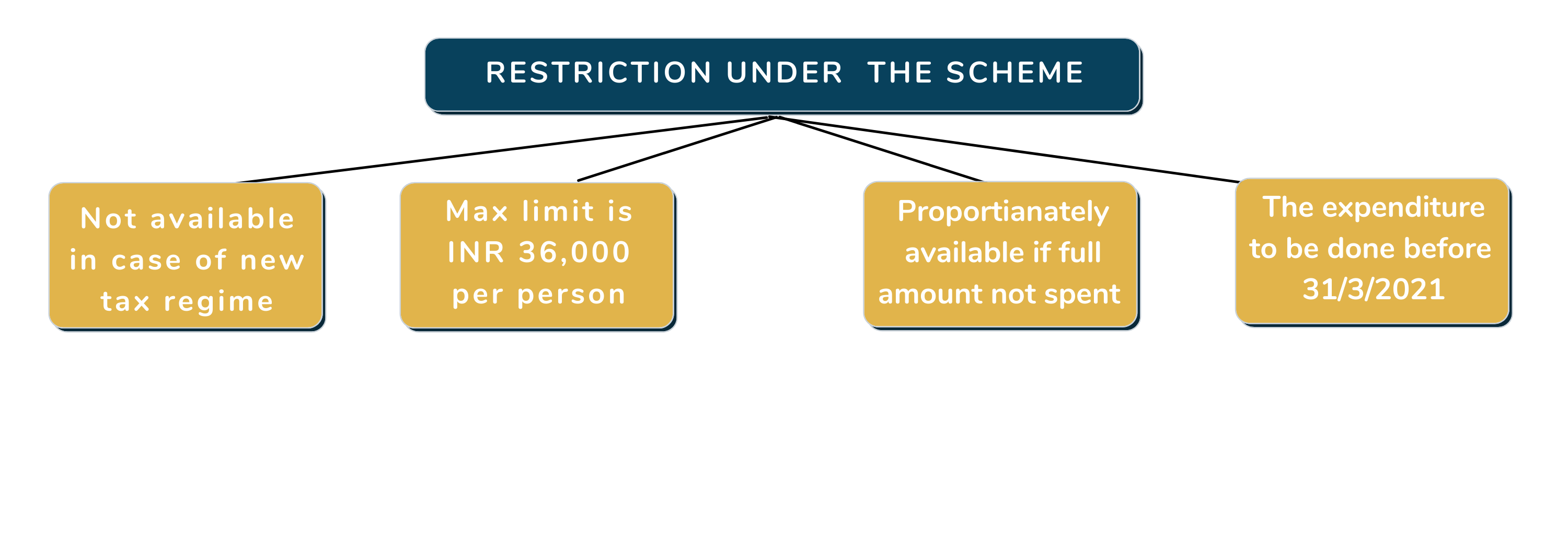
    A. Due to the Covid-19 pandemic, many people are not in a position to travel with family, and, therefore, LTA can be claimed even without travelling. For claiming the LTA exemption,

    Conditions to be fulfilled for claiming LTA exemption under the scheme

    • 3 times the amount of LTA earned to be spent
    • Goods and Services to be purchased from registered GST dealer
    • Payments to be done only through digital modes
    • All Invoices of the purchase has to submit to the employer

      Get your weekly dose of Money Masala from us.


      What is DIY Investing? What are the pitfalls to avoid while investing by yourself?

      DIY or Do It Yourself is a concept that catches people’s fancy and has been in trend for the past few years. It makes you feel resourceful and worthy of doing things on your own. DIY Investing is something we have all always been doing. We ask our friends/family/That CA uncle for the purpose of investing. Think of it like health. We all get sick but do we always consult a doctor? Not necessarily ! If you have a cut in your hand or cold, your grandmother comes up with a DIY remedy. However, you cannot use home remedies for all health issues.  Similarly, you can start investing on your own for small financial goals or with some basic amount. As it is always better to consult a doctor for your health concerns, it is always better to have a financial advisor on your side.  Where you want to do DIY Investing, let's understand the process of the same. 

      The process of DIY investing:

      DIY investing allows you to manage your own portfolios with  full control. However, it’s not an effortless process. You must follow a specific and pre-defined methodology towards DIY investing to achieve the expected returns and sufficiently lower risks. 1. Define your needs and objectives Every investor must have  an objective, a set of goals behind their investments. We all save and invest money to achieve our goals such as travelling, buying a car, buying a house etc. If nothing, then the basic objective of achieving wealth creation or financial freedom is a must for everyone. So before you start your investment it is important to pen down your goals along with the amount needed for that goal. You can learn more about this in this article here - Goal based investment. 2. Know your risk profile Now that you know the amount you need and when you need it, the next step is to understand your risk profile i.e. how you want to reach the amount that you need. You must understand how much risk you are comfortable taking to achieve your goals. A person with an aggressive risk profile has a higher risk taking capacity and can invest, say 80% of his savings, in equity whereas a conservative person would invest a lot less in equities. The idea is that you take only so much risk that allows you to sleep peacefully, invest consistently and have a smooth ride to achieving your goals. Know more about your risk profile and how it helps you invest better in this article - What is a risk profile? How to invest on that basis? 3. Understand your Investment Option The next step is to understand all the asset classes. You should know which asset  class is right for you and what are the risks and returns associated with it. You can enroll in our course-  NM 103: Basics of Asset Classes. This course is all about setting the base with learning about the Investment asset classes and what they do.   4. Allocate asset allocation Based on your risk profile, it’s time to put your money to work. For example,  if you are of growth profile invest 70%% of your investment in Equities and 30% of your investment in Debt. A proper asset allocation is what will determine most of your gains rather the selection of the best equity share. 5. Construct plans and strategies After you have gathered and analyzed enough information  the next move is to develop ideas, plans, and strategies in line with their goals.  The plans include how much to invest each month, selection of financial instruments to invest in, tax considerations, and developing an investment strategy. The strategies can either be focused on growth, value, income, or a combination of all based on individual needs and priorities. 6. Implementation of the Plan & Strategy The plans and strategies are then implemented in the most practical manner possible. DIY investors might need to try various strategies before settling for one. Even after implementation, it is necessary to keep monitoring and evaluating the investment strategies and make changes as and when needed.

      Pitfalls of DIY investing:

      1. Lack of research and Professional Advice DIY investing may seem appealing, but the knowledge and experience of professional financial advisors  cannot and should not be ignored. It takes years  of experience to understand the market. You as a DIY investor will not be that skillful to handle your portfolio in every situation, especially when the markets are volatile. Everytime you believe this is it - there is something completely new that happens to be market and you will have to change your strategy. 2. Needs a lot of time Investing demands a lot of research and monitoring of your portfolio. You need to learn about your investment products, various asset classes, their features, risk & return, market scenario, global market conditions, its impact on your investments, how you should make a decision etc. Even when you consult someone to invest for you - it is very important you understand the basics of Investing. You can check our course for the same - Namaste Money. We start this course with a blank slate and handhold you through each concept as you baby step your way into finances. By the end of this course, you will be a better DIY money manager and investor. 3. Fear & Greed Emotions play an important role while investing. While you are investing on your own your fear or greed can oppose your investment strategy. Whereas, the financial advisor will not ask you to take decisions that are influenced by emotions.  Check out  our blog: What is loss aversion bias in investing? 4. Lack of monitoring DIY investing isn't just about doing your homework prior to making an investment. It is an on-going process. It is essential to monitor your investments. For example, if you are invested in a mutual fund, you need to check a few factors, for example what if the fund manager changes? You need to be updated with your investments. 5. Not rebalancing Investing isn’t a one-time exercise. You need to review and  rebalance (where necessary)it at least once a year. Check out our blog: Smart investing: Time to re balance your investment portfolio

      Wealth Café Advice:

      Anyone can be a DIY investor. But not everyone will succeed. Where you have the time and ability to do the skills required to invest on your own, DIY Investing can be fun and would save you the cost as well. Do note that finance is a continuous learning process. Where you are just investing based on tips and recommendations and calling it DIY investing, then it is better to seek professional advice and let someone else do it for you. You can reach out to us at iplan@wealthcafe.in.  If you want us to manage your investment, you can learn more about us at ria.wealthcafe.in and reach out to us.

        Get your weekly dose of Money Masala from us.


        Are Mutual Funds Safe?

        Are mutual funds safe? No it is not! Mutual funds are subjected to all investment risks that your underlying investment asset class is subject to and many more.

        Going back to the fundamental investing rule - High Risk = High Return; Low Risk = Low Return. Your returns are the rewards for managing the risk of an asset class. So if you are earning any kind of return from your mutual funds (which in most cases you are), there is a risk associated with them.

        The question should not be: Are Mutual Funds safe? Which are the safest Mutual Funds? You must understand the underlying risk of these mutual funds and invest in them based on your risk taking capacity. 

        How to Check the Risk of Investing in Mutual Funds? 

        Riskomter in fact sheet  - As per SEBI's product-labelling guidelines, AMCs have started disclosing the new riskometers for their funds. The five risk levels are ‘low’, ‘moderately low’, ‘moderate’, ‘moderately high’ and ‘high’. This helps investors get a better picture of the right risks associated with a particular fund. You must check the riskometer to get a brief idea of the risk of the particular mutual fund scheme.

        Standard deviation - A fund's standard deviation tells you how volatile or risky a fund can be compared to the benchmark and its peers.

        When prices move wildly, standard deviation is high, meaning an investment will be risky. Low standard deviation means prices are calm, so investments come with low risk. Instead of just looking at the standard deviation of a fund, you should compare the standard deviation of a fund with the standard deviation of the benchmark index to get a better idea of the risk

        When it comes to Debt Mutual Funds, there are some specific factors that one can check to know the underlying risk of the same i.e.

        1. Credibility of the fund

        Debt Mutual Funds can invest in securities with different credit ratings, as per the scheme's investment strategy. The credit rating of the security is listed alongside its name in the mutual fund factsheet. These ratings are assigned by different rating agencies and indicate the credit worthiness of the borrower. Higher the rating, higher is the creditworthiness of the borrower, although the returns may be lower as compared to a bond issued by an entity that has a lower rating.

        2. Duration of the fund

        SEBI has defined categories of mutual funds based on maturity or Macaulay duration of the fund. Put very simply, Macaulay Duration is the time taken for a bond to repay its own purchase price in present value terms. Generally, the longer the maturity of the instruments that the mutual fund holds, the higher the Macaulay duration of the fund. Typically the longer the maturity/duration of the fund, the higher the expected returns. But higher duration also leads to higher volatility in returns with change in interest rates.

        Simply put, ultra short duration funds, liquid mutual funds being the one with the shortest duration and underlying better credit securities (you must check the portfolio before investing) are the safe debt mutual funds to invest in. That is why we generally recommend these for any short term goals and emergency fund needs of our investors. 

        You can learn more about the underlying risk of Investing in Equity - here and Investing in Debt - here

        Wealth Café Advice: 

        As explained above, mutual funds are not safe, there will always be a certain level of risk in them. You must analyze that risk based on your risk taking capacity and invest only in those funds which you understand and are okay to bear/manage the risk to achieve your goals. Do not invest in small cap funds or thematic funds because they are trending and you are a conservative person. The funds will trend while you will have sleepless nights. You can’t entirely escape risk, but you can always manage it.  Understanding your risk capacity is the very first key step to help investors gain without pain. -What is a Risk profile? How to Invest basis that?


        Check our course- NM 104: Basics of Mutual Funds - to learn more about Mutual Funds in detail.


        Disclaimer: - The articles are for information purposes only. Information presented is general information that does not take into account your individual circumstances, financial situation, or needs, nor does it present a personalized recommendation to you. You must consult a financial advisor who understands your specific circumstances and situation before taking an investment decision


        Pay taxes on Mutual funds - Unrealized vs Realized Gains

        Whether you are putting money away for a rainy day, retirement or anything in between, you are likely to be taxed. Investors do not think about tax expenses when making investment decisions, even though it is one of the crucial aspects of investing.

        Do you check pre tax and post tax returns before you invest your money ? Do you know how fixed deposits and debt mutual funds investments can impact your tax differently? Let's discuss how the difference in taxability of Debt Mutual Funds versus Fixed deposits becomes one of the factors you must consider when you make an investment decision.

        Difference between realized and unrealized gains in a mutual fund.

        Realized gains are the returns you make after actually redeeming(selling) your mutual funds. Unrealized or notional gains or losses are the ones which you see based on everyday market movements but do not book it. Unrealized gains only exist on paper and results from an investment which has yet not been sold.

        Taxation of gains

        Where there are unrealized gains - no tax is payable as you have not booked any profits. Only in case of realized gains, do you have to pay taxes in case of a mutual fund. So once you sell your Mutual funds and the funds are credited to your bank account, you have to compute your tax liability and pay capital gains taxes on the same.

        To know more about the taxability of mutual funds, check here - Taxation of Mutual Funds for FY 2021-22 (AY 2022-23).

        It is not that every other asset class, you pay taxes on actual basis, in fact in a fixed deposit, you pay taxes on interest accrued to you, even where the same is not credited to your bank account each year. This way Fixed deposit income is taxed differently as compared to debt mutual funds (because the gains are taxed only on realisation) 

        Let's take an example to help you explain how tax eats into your profits.

        For the purpose of this example, we shall consider that the returns from fixed deposits and debt mutual funds are the same. They will be taxed as per the relevant tax laws and how that would impact the net returns you can make from the investment. 

        Ria is the investor and she falls under the 20% tax bracket. She has made an investment of INR 10 lakhs in FD and debt mutual funds for 3 years, giving a return of 8% per annum.

        https://financial.wealthcafe.in/blog/2021/06/cost-of-inflation-index-fy-2021-22-ay-2022-23-for-capital-gain/

        In case of FD, interest will accrue to her every year, and she has to pay taxes on the same as per her slab rate every year, even where the same is not credited to her bank account. Infact, the interest after the taxes are paid will be reinvested.

        FD = INR 10,00,000

        Interest - INR 80,000

        Tax - 16,000

        Reinvestment of Interest in year 1 = 64,000

        (same reinvestment would happen in year 2 and year 3 - after tax)

        After 3 years: 

        Total tax paid - INR 48,000

        Net cash in hand = INR 12,04,288


        In case of debt mutual funds, she will have to pay taxes only on realization of profits. She decided to sell the same after 3 years and will have to pay long term capital gains on the same at 20% (with indexation benefits). So effectively, the tax she has to pay is less than what she had to pay for her fixed deposits. Also, the reinvestments would be of the entire earnings and not just post tax earnings in case of fixed deposits.

        Amount invested - INR 10,00,000

        Gains = INR 80,000

        Tax - Nil (No sale)

        Reinvestment of gains = INR 80,000*

        After 3 years

        Total Tax Paid - INR 32,565 (indexation benefit)

        Net cash in hand - INR 12,27,147

        *the returns are not assured in a debt mutual fund. We have considered this for explanation purposes here.


        From the above example, you can understand that the net cash in hand that ria would earn is 102% of the final amount from fixed deposits. Infact, if she was in the 30% tax bracket, she would make 104% more in the case of debt mutual funds than fixed deposits.

        This is how realized and unrealized gains impact your tax in various asset classes and also become one of the factors that one must consider when they are investing their money.

        You can also check our blog on -Why you should avoid investing all your money in a FIXED DEPOSIT?


        Wealth Café advice: 

        Please note that tax is not the only but one of the criteria that one must look at when investing their money in debt funds and Fixed deposits. Fixed deposits are safer and provide assured returns as compared to debt mutual funds. Debt mutual funds have many types and each has a different risk parameter. You can look at the liquid funds, or ultra short duration debt funds for lower risk and comparable returns to Fixed deposits. Please note that returns in all debt mutual funds are volatile and invest in them only after considering all the possible risks.

        Check our course- NM 104: Basics of Mutual Funds - to learn more about Mutual Funds in detail.


        Disclaimer: - The articles are for information purposes only. Information presented is general information that does not take into account your individual circumstances, financial situation, or needs, nor does it present a personalized recommendation to you. You must consult a financial advisor who understands your specific circumstances and situation before taking an investment decision.

        What are the fees you pay on your mutual funds? - fees on the fund is charged and NAV is after that

        There are many different investment options available to help you reach your financial goals. Regardless of which investment you choose, it is important to understand the costs involved and how they can affect your investment. 

        What are these charges??

        When you go out to eat pizza, are you charged only for the ingredients that were used to make the pizza? Of course not. The bill you pay includes other  charges incurred by a restaurant including its rent, electricity, etc. as well as the chef’s expertise. Similarly, when you buy a mutual fund you do not just pay for the securities  that your fund buys and sells. 

        The majority of these expenses are Investment and Advisory fees. Apart from this, there are some other fund management expenses like marketing and selling expenses including agents’ commission, brokerage and transaction cost, registrar fees, trustees fee, audit fee, custodian fees, costs related to investor communication, and more. The total expenses charged by a Mutual Fund are capped in what is called the Total Expense Ratio. 

        Total Expense Ratio 

        Currently, in India, the expense ratio is fungible, i.e., there is no limit on any particular type of allowed expense as long as the total expense ratio is within the prescribed limit. The regulatory limits of TER that can be incurred/charged to the fund by a Mutual Fund AMC have been specified under Regulation 52 of SEBI Mutual Fund Regulations.

        Effective from April 1, 2020 the TER limit has been revised as follows.

        Assets Under Management (AUM) Maximum TER as a percentage of daily net assets
        TER for Equity funds TER for Debt funds
        On the first Rs. 500 crores 2.25% 2.00%
        On the next Rs. 250 crores 2.00% 1.75%
        On the next Rs. 1,250 crores 1.75% 1.50%
        On the next Rs. 3,000 crores 1.60% 1.35%
        On the next Rs. 5,000 crores 1.50% 1.25%
        On the next Rs. 40,000 crores Total expense ratio reduction of 0.05%for every increase of Rs.5,000 crores of daily net assets or part thereof. Total expense ratio reduction of 0.05%for every increase of Rs.5,000 crores of daily net assets or part thereof.
        Above Rs. 50,000 crores 1.05% 0.80%

        Source: https://www.amfiindia.com/investor-corner/knowledge-center/Expense-Ratio.html 

        How are these charges levied to the investor? Where can I see this charge?

        The expenses are deducted from the NAV of your Mutual Fund Scheme on a daily basis. The NAV that is listed every day is published only after deducting expenses of a mutual fund. For example, if your investment value today is Rs. 100,000 and expense ratio of your fund is 1% then today’s expense amount charged to your Fund  will be 100,000 X 1% / 365 i.e. Rs.2.73. The total value of your investments will be reduced to INR 99,997.27. 

        Basically, you do not get a separate report of your charges in the account statement but it is deducted from your fund NAV. You can check the expense ratio as a % to know whether the fund you own has a high or low expense ratio compared to other funds. It is one of the factors to refer to but remember that it is not the only one.

        Wealth Café advice:

        Before investing in a fund, you should always check the expense ratio. If it’s possible, read the Scheme Information Document to see what all expenses have been charged for. Also, remember, a good fund is the one that delivers good performance with optimal expenses.


        Check our course- NM 104: Basics of Mutual Funds - to learn more about Mutual Funds in detail.

        Disclaimer: - The articles are for information purposes only. Information presented is general information that does not take into account your individual circumstances, financial situation, or needs, nor does it present a personalized recommendation to you. You must consult a financial advisor who understands your specific circumstances and situation before taking an investment decision.

        What is a Risk profile? How to Invest basis that?

        Many young investors tend to invest on peer pressure or because someone asked them without understanding why they want to invest and how they should invest.

        There is only one answer to your ``Where to invest?”, “How much to Invest”. “When to sell” ? “How to get started?” i.e. risk profile.

        What is a risk profile?

        There is a risk associated with everything that you do in life. Whether it is a choice of the college that you want to study in  or the employer you decide to work for; everything that you do in life is associated with a certain amount of risks with anticipation of some return. Even your relationships have the risk - return associated with it.   Your investments are not any different, there is a risk - return relationship there as well. Every investment has an underlying risk and hence, you earn a return on the same. Hence, you must invest based on your risk profile - i.e. your risk taking capacity which basically means - How much risk are you okay to bear  in order to earn your desired returns. 

        Technically speaking, Risk profile is an analysis of your risk appetite in different situations. Every individual has a different tolerance of risk based on their age, income, financial stability, etc 

        Your risk taking capacity (risk profile) is a function of two things:

        1. Your ability to take risk ( Depends on your age, amount of wealth and urgency of goal)
        2. Your willingness to take risks (Depends on your wealth, life experience and your profession.)

        Remember the fundamental rule of investing:

        High Risk = High Returns

        Low Risk = Low Returns

        You can learn more about what investment risk is from our YouTube video here - https://www.youtube.com/watch?v=3pl5IIldDFE 

        Use our risk calculator tool to view your investment risk level. Find out your risk profile, estimate financial risk-taking capacity and understand your (psychological) risk tolerance level . This will help you know your asset allocation i.e. your Debt: Equity mix which will help you derive how much you should invest in each asset class.

        You must know the risk of your investments and then you must align your risk taking capacity with the underlying risk of the investments so you can sleep peacefully at night while your money is growing for you.


        Here are the most common risk profiles for investors: 


        SR No Risk Profile Meaning Percentage in Equity(Return = 15%) Percentage in Debt(Return = 8%) Expected Return
        1 Aggressive Willing to take significant risk to maximize return over long term 90% 10% 14.3%
        2 Growth Seeking maximum return over medium to long term with high risk 70% 30% 12.9%
        3 Balanced Seeking for relatively higher  returns over medium to long term with moderate risk 50% 50% 11.5%
        4 Conservative Willing to take small level of risk for potential returns over medium to long term 30% 70% 10.1%
        5 Defensive Seeking safety of capital, minimal risk and/or low return 10% 90% 8.7%


        Why to invest based on a risk profile?

        It is very convenient to invest based on a random recommendation or a tweet or a telegram post. But does that really work for you? Does it give you the desired results needed to achieve your goals? Does it answer your question of how much to buy and when to sell? Such recommended buys are only half baked - Let me share an example with you, one of our Instagram followers had messaged us about her investment journey. Tanya (name changed) was a college graduate and had an urge to invest her internship stipend. It was a good initiative of her to invest from an early age; however due to lack of knowledge she invested in small cap mutual funds as her friends suggested, initially it was doing very well. Now given that she was a college graduate and was investing her only pocket money savings - small cap funds were a very risky investment for her. But she did not know this and invested all her savings in that. . Sadly after a year the market crashed in March 2020 and she faced more than  50% loss in her portfolio, and she sold all of them in panic. This is not Tanya's story but everyone’s. We are sure that at some point in time, you would have also bought and sold purely based on recommendations and regretted those decisions later.


        Further, we learn from this instance that if she would have diversified her portfolio based on her risk appetite, she wouldn’t have faced so much loss and would have in fact more money eventually because she would have continued to invest with the market loss. 

        I have written a detailed blog on my personal investment journey where I invested based on my risk profile and how I made over 28% gains from my portfolio. https://financial.wealthcafe.in/blog/2020/03/how-am-i-investing-in-current-times/ 

        As an  investor, your risk profile will help you plan your investments as per your risk bearing capacity so that in any worst-case scenario, you will never lose beyond your capacity. Hence, the benefits of the same are: 

        • It helps you in taking the right risk as per your willingness and ability.
        • Selecting the right asset class in check with your goal and risk profile, so that you have a perfect balance of rewards and risk in your portfolio.
        • It helps to keep your emotions away from your trading decisions.

        Read our article to understand how to invest based on risk profile: https://financial.wealthcafe.in/blog/2021/10/monthly-sip-for-higher-education/ 

        Wealth Café Advice

        Risk profiling is very important for every investor. Any investment planned without a risk profile analysis can lead to severe financial problems. However, with changing priorities and responsibilities your risk profile will change. For instance, the kind of risk you were willing to take at 20 may not appeal to you at age of 45. Therefore, revisit your risk profile every year when you are reviewing your portfolio. This will help to benchmark your risk tolerance without much hassle. To understand this better you can even seek financial advice  from a registered investment advisor.  You can reach out to us by filling this google form or at iplan@wealthcafe.in We are SEBI registered investment advisors and can help you make sound investment decisions. You can read about our advisory services at ria.wealthcafe.in

        Disclaimer: - The articles are for information purposes only. Information presented is general information that does not take into account your individual circumstances, financial situation, or needs, nor does it present a personalized recommendation to you. You must consult a financial advisor who understands your specific circumstances and situation before taking an investment decision.

        What are the factors you must check when you are looking at a mutual fund?

        Are you someone investing in mutual funds using app filters like 4-5 stars or sorting it based on highest to lowest returns? Do you invest in mutual funds with low NAV and believe you bought it for cheap? Do you feel that lower the expense ratio of a mutual fund scheme, cheaper the investment for you? Do you make mutual fund investments based on hearsay or advice from your relatives, colleagues or train companions? Or, are you investing in the Best 2021 Mutual Funds suggested on someone's Instagram reels?

        Well, if your answer to any of the above questions is yes, then you are at the right place. Selecting a mutual fund is an art and science that is tough to learn but rewarding in the long run.

        FACTORS TO CONSIDER

        Personal Needs: Your Individual requirements

        1. Investment Objective - Every investor has an objective, a set of goals behind their investments. We all save and invest money to achieve our goals such as travelling, buying a car, buying a house etc. If nothing, then the basic objective of achieving wealth creation or financial freedom is a must for everyone. So before you start your investment it is important to pen down your goals along with the amount needed for that goal. You can learn more about this on this article here - Goal based investment
        2. Goal Tenure - Once your objective is in place, you need to calculate the time required to achieve that goal. It will also help you to choose the right investment for you. Simply put - short term goals - invest in debt ; long term goals - invest in a mix of debt & equity as per risk profile.
        3. Risk Profile - Now that you know the amount you need and when you need it, the next step is to understand your risk profile i.e. how do you want to reach the amount that you need. You must understand how much risk you are comfortable taking to achieve your goals. A person with an aggressive risk profile has a higher risk taking capacity and can invest, say 80% of his savings, in equity whereas a conservative person would invest a lot less in equities. The idea is that you take only so much risk that allows you to sleep peacefully, invest consistently and have a smooth ride to achieving your goals. Know more about your risk profile and how it helps you invest better in this article - What is a risk profile? How to invest basis that?

        Quantitative factors: Evaluating the Fund

        1. Past Return Performance

        Past performance of a Fund is a starting point of what to expect from investing in a fund. However, ensure that you do not look at this number in isolation.

        • Every mutual fund scheme has a benchmark against which it tracks and evaluates its performance. Check how the mutual fund scheme has performed compared to its benchmark. Has it been under-performing its benchmark or been able to beat the benchmark consistently?
        • You should then check the returns of the mutual fund in comparison to other funds in the same category. If you are choosing a Large cap fund, you must check how well your fund has performed in comparison to other large cap funds.

        All this while you must bear in mind that there is no guarantee of the past performance of the fund being repeated in the future.

        2. Risk Statistics

        Risk is uncertainty and variability in returns. Returns are the result of managing the risk. Some of the statistics that will help you understand the risk your fund is taking to achieve the returns you just analyzed include:.  

        1. Standard Deviation: It measures the mutual funds’ investment risk and is indicative of the stability of returns of a portfolio. With this information, you can judge the range of returns your fund is likely to generate in the future. Higher the standard deviation of a fund, higher is the risk associated with the investment.
        2. Beta: It measures volatility of the fund compared to its benchmark. If the beta of a scheme is more than 1, then the scheme is more volatile than its benchmark. If beta is less than 1, then the scheme is less volatile than the benchmark. Lower the beta, lower the risk associated with the fund. 
        3. Sharpe Ratio: Unlike the previous two measures, the Sharpe Ratio gives you the risk adjusted returns of a portfolio. If two funds have similar returns, the one with the higher standard deviation will have a lower Sharpe Ratio. A fund with a higher Sharpe Ratio is considered better than its peers as it is able to deliver higher risk adjusted returns.

        3.  AUM of the Fund

        AUM is the total amount invested by that particular fund. It is the total market value of the assets that a mutual fund manages at a given point in time. 

        Only because a Fund has a large AUM, it does not mean it is a good Fund. You need to consider other factors as well. Having said that, avoid Mutual Fund Schemes that have a very small AUM as the returns from such schemes can be very volatile and subject to large movements on exit by large investors of that scheme.

        4. Cost of the fund:

        As with any business, running a mutual fund involves costs. This cost is called the Expense Ratio. If you have 2 identical funds w.r.t. to the above discussed parameters, then you choose the fund with the lower Expense Ratio. Check out our article to understand it more in detail

        III. Qualitative factors: Fund Manager and Fund’s philosophy

        The fund manager is the professional who takes the investment decisions for your money after you invest in a scheme. The fund manager plays a key role in how your investment performs, as he/she is the person to decide on which stocks or securities to invest and how to distribute the money for a particular mutual fund. 

        Obviously the Fund manager is not alone and he has a team helping him do the analysis and his decisions will be based on the Objectives of the particular Scheme and the overall Fund Management philosophy.  

        Apart from looking at the qualifications of the Fund Manager, you must look at his experience and how long he has been managing the Mutual Fund Scheme and the performance of the Fund under him. Longer his tenure with the fund with a consistent performance should give you confidence in selecting the Fund.

        A strong Mutual Fund team, guided by well defined Investment Fund Philosophy will be a great aid to an experienced Fund Manager.

        Wealth Café  Advice: 

        These pointers will give you a headstart to start evaluating the various Mutual funds schemes and shortlist them. You need to regularly track these parameters of your invested Funds, track the Fund Managers and see how your Fund is performing vis-à-vis the market. 

        If your day to day job does not give you the time to keep a track of your funds, you can always consult an expert whoa will do this for you. If you want us to manage your investment, you can learn more about us at ria.wealthcafe.in and reach out to us.

        Check our course- NM 104: Basics of Mutual Funds - to learn more about Mutual Funds in detail.

        Disclaimer: - The articles are for information purposes only. Information presented is general information that does not take into account your individual circumstances, financial situation, or needs, nor does it present a personalized recommendation to you. You must consult a financial advisor who understands your specific circumstances and situation before taking an investment decision.


        How are investors buying mutual funds - looking at the best performing ones?

        The first thing to answer before you start investing is to know “WHY” you are investing in Mutual Funds.

        1. Debt Funds - To build a safety net, achieve short term goals and earn higher tax efficient returns compared to  fixed deposits.
        2. Equity Funds - To create long term wealth and achieve goals


        Many Investors just look at the best performing funds. They would google - Top 5 funds for 2020 or Top 5 funds for 2021 and invest their money in the fund names that appear. So much so that most of the time they do not even remember the name of the fund. So many times, we have asked people - which fund have you invested in and I would get an answer saying - Umm HDFC bank? Kotak? Something DDFC…basically full confusion and no research.


        Yes, when you don't know how to invest and you want to invest, choosing the best funds based on recent past performance seems the easiest choice to make. However, it would also turn out to be a bad choice. 


        Studies have proven that selecting mutual funds based on high-performance track records is naïve. The Star rating of various mutual funds keeps changing, a fund that is top rated in this one year, is hardly the top-rated fund in the subsequent years. Tim Courtney, a chief Investment advisor of US-based Burns Advisory, did backtesting of past performance of the funds most highly rated, he found that they usually performed poorly after they have gotten 5 ratings. Hulbert financial digest, an investment newsletter, found that if investors continually adjusted their mutual funds' holdings to hold only the highest-rated funds, a total stock market index would have beaten them by 45.8 % in the past decade (he studied funds from 1994 to 2004 in the USA). In fact over the years, it has gotten even more difficult to beat the markets and get alpha on your investments.  - extracts from Millionaire extracts - How to build wealth living overseas by Andrew Hallam


        Recently, even ET money conducted a similar study for the Indian Mutual Fund market and tracked the returns investors would make. As per the study, they tracked that if investors followed a buy and sell strategy with top rated mutual funds i.e. they bought the best fund and then sold them when their rankings fell, they would make a CAGR of 12.6% in the past 10 years (without accounting for the cost of investing, selling and taxation on the same). Now, instead of doing this, if the investor would have only invested in an index fund in the past 10 years (2010 to 2020), they would have made a return of 12.2%. 


        The cost of transactions such as brokerage, exit load, STT and capital gains taxes (payable every time you book gains on mutual fund transactions) would further reduce your returns in case of a buy and sell strategy based on the top ranking fund. Also, it is not feasible to follow this approach once your portfolio grows too much.


        Some learnings from the above 2 studies are as follows:


        1. Chasing past performance and looking out for best returns is a futile activity, it is not giving you better performances. It is only tiring you and keeping you away from focusing on important parameters.
        2. Invest as per your goals and risk profile, finalize the funds and stick to them. Rather than looking for quick gains, understanding wealth creation takes consistency and discipline is the way.
        3. If you want to learn on what parameters to check to select the right fund (please stop using the word best funds), check our blog  - Factors to check.
        4. If you really want to invest and make a financial plan - you can reach out to us by filling this google form or at iplan@wealthcafe.in We are SEBI registered investment advisors and can help you make sound investment decisions. You can read about our advisory services at ria.wealthcafe.in


        Wealth Café Advice -  “Past performance is no guarantee of future results.” In search of looking for the best, you are missing on the right and the time a fund needs to create wealth and achieve your goals.


        Check our course- NM 104: Basics of Mutual Funds - to learn more about Mutual Funds in detail.

        Disclaimer: - The articles are for information purposes only. Information presented is general information that does not take into account your individual circumstances, financial situation, or needs, nor does it present a personalized recommendation to you. You must consult a financial advisor who understands your specific circumstances and situation before taking an investment decision.

        How long should you stay invested in mutual funds?

        The struggle to stay committed to investments is as real as it is to stay committed to a human. How long your relationship with your mutual funds is a function of your need for that investment and your risk profile. 


        Based on tenure of your goals


        Invest based on your goal tenure: Investing is very simple if we understand all the rules. Goal based investing is based on the tenure of your goals.

        • Short term goals are less than 3 years goals.
        • Long term goals are more than 3 years goals


        Invest in mutual funds by first identifying for which goal you are investing, what is the tenure of that goal and then invest till that goal is accomplished. Now where you invest to achieve that goal is a function of your risk profile. (we have discussed that here)

        • Short term goals are less than 3 years goals. - Debt Mutual Funds (short term)
        • Long term goals are more than 3 years goals - Mix of debt & Equity (as per your risk profile)


        Invest in Equity for long term for higher gains and managed risk


        Invest in equity for the long term to reduce the risk of investing in equity. Compound and grow your wealth and eventually achieve your long term goals. Lets understand how your long term goals will be achieved by investing in Equity. 


        For instance, in 2010, if Rakhi had a goal of financing her child’s education and back then she knew that 12 years later i.e. in 2023 for her child’s Graduation, she would need around 1 crore for the same she would invest in the below mentioned manner (based on our recommendations)


        From our savings calculator, you would have known that you need to invest INR 42,000 each month for the next 10 years (based on the assumption that you have a growth profile and would earn 12.6% returns from the same).


        Now based on our investment plan - she would put 70% in equity and balance 30% in debt. Hence, from INR 30,000 if she invested 21,000 in Nippon India Growth Fund ( a mid cap Mutual Fund) each month for the past 10 years and stayed with the fund through all ups and downs, she would have made 17.10% return. Do note that when you are investing for a long term goal it will eventually turn into a short term goal and in the last 2 or 3 years remaining for the goal, you must shift your investments to debt and discontinue investing in Equity.


        Hence, in case of Rakhi, she would invest in Nippon India Growth Fund till 2021 and then discontinue the same. For 2021, 2022, and 2023, she would invest the entire 30,000 INR in debt.


        As per the returns, in 2021, she would have an equity corpus of INR 98.31 lakhs and a debt corpus of INR 21 lakhs. A total of INR 1.19 crores was accumulated in 2021. Given the goal is 2 years away, we advise Rakhi to gradually move her Equity exposure to debt to avoid any last minute volatility. Where the goal's value would have changed and Rakhi decides to continue her 30,000 investments, she can invest the same in Debt. 

        (image from value research)


        Please note that the context of this article is that you must invest for the long term in Equity only where your goal is long term. Over the long term, the risk of equity also reduces as we can see in the case of Nippon India Growth Fund from the image above. Long term investing results in higher gains due to compounding. Still people do not make returns, because they cannot stay committed to their mutual funds.


        Do people actually stay invested for long term

        Nippon India Growth Fund, launched in October 1995 as a mid-cap scheme, completed 26 years in October 2021 delivering a compound annual growth rate (CAGR) of 22.91%. Since launch, the fund has grown 207 times over. In other words, ₹1 lakh invested in the fund at the start would now be worth ₹2.07 crore.

        However, according to data released by the fund house, only 2,600 investors have stayed with the fund since inception and their average assets under management (AUM) is a mere ₹5 lakh. In other words, this cohort of patient investors would have invested just ₹2,415 on average at the time when this fund was launched. (source of this data is from mint - https://www.livemint.com/mutual-fund/mf-news/nippon-amc-sheds-light-on-missing-mf-millionaires-11634232789297.html)

        The effect of your money staying invested for longer is far more than getting in at the right time. Not many investors had stayed put for more than 15 years. Unfortunately, people try to time the market. The fund had been managed by various fund managers over time, and has weathered numerous economic events, including the dot com bust, the 2008 crisis, 2013 taper tantrum and covid in 2020.

        Wealth Café Advise:

        As investors, learn to be more disciplined and focused on the long term and do not get carried away by market volatility.

        According to the study conducted by Axis Mutual Fund, four behavioral traits affect investors’ returns:

        • They overreact to market sentiment.
        • They focus too much on short-term market or fund performance.
        • They don’t follow an asset allocation strategy.
        • And, finally, they tend to invest haphazardly, rather than systematically.


        Check our course- NM 104: Basics of Mutual Funds - to learn more about Mutual Funds in detail.

        Disclaimer: - The articles are for information purposes only. Information presented is general information that does not take into account your individual circumstances, financial situation, or needs, nor does it present a personalized recommendation to you. You must consult a financial advisor who understands your specific circumstances and situation before taking an investment decision.

        [mc4wp_form id="2150"]

        WCafe Financial Services Pvt Ltd (formerly known as Wealth Cafe Financial Services Pvt Ltd) is a AMFI registered ARN holder with ARN-78274.

        WCafe Financial Services Pvt Ltd (formerly known as Wealth Cafe Financial Services Pvt Ltd) is a SEBI registered Authorised Person (sub broker) of Sharekhan Limited with NSE Regn AP2069583763 and BSE Regn AP01074801170742.

        Copyright 2010-20 Wealth Café ©  All Rights Reserved