How to fill Form 12 BB?

All the salaried taxpayers need to fill out Form 12BB. It is supposed to be submitted at the beginning of every financial year by the employee to his/ her employer for the correct deduction of TDS. It discloses all their tax-saving investments of that particular financial year.

Steps to Fill Form 12BB


  1. Download Sample Form 12BB
    You can download the sample Form 12BB from the Income Tax Department website.
  2. Add Personal Details
    This is the first section of Form 12BB, you need to mention your personal Details i.e, Add your Name, Address, and PAN details. Also, mention the current financial year i.e 2020-2021.
  3. Add house rent allowance Details
    If you are incurring any rental expenses for your work then that can be deducted under HRA. 
  4. Add LTA Details
    Add details of LTA if any.
  5. Enter Details regarding Interest on Loan for Borrowings
    If you are paying any Interest on EMI of home loans in this particular Financial year it can avail you benefit up to 2,00,000 for self-occupied property and no limit on rented property.
  6. Add Chapter VI-A Deductions
    Add details of tax deductible investments and deductions under 80C, 80CCD (1B), 80D, 80DD, 80E, 80G etc.

It is important to do tax planning to save money on tax. Make sure you completed the below 3 steps to claim tax benefits

  1. Invest in section 80C investments, declare home loan principal repayment and collect Rent receipts.
  2. Declare the investment and submit documentary proof to the employer.
  3. Submit Form 12BB to the employer.

Step 3 is the most crucial step in claiming the tax benefits. Make sure you do not miss this step. Submit form 12BB to your employer and save on tax. Happy investing.

FAQs

When is Form 12BB submitted?

Usually, Form 12BB is submitted at the start of the financial year to estimate the TDS calculations accurately and adequately.

Do I need to submit my Form 12BB to the Income Tax Department?

No, your employer will submit the form on your behalf after computing the TDS.

Can my actual tax-saving investment be different from the declared?

As an investor, understandably so, your investment decisions can vary. Similarly, the actual tax investments can be different from your proposed plans. However, you should collect and have the actual evidence when applying for tax benefits.

Is it essential to keep documentary evidence for claiming tax benefits?

As stated in the above question, yes, you should have actual evidence to attach while applying for tax benefits and TDS to the employer, or your application wouldn’t be accepted.

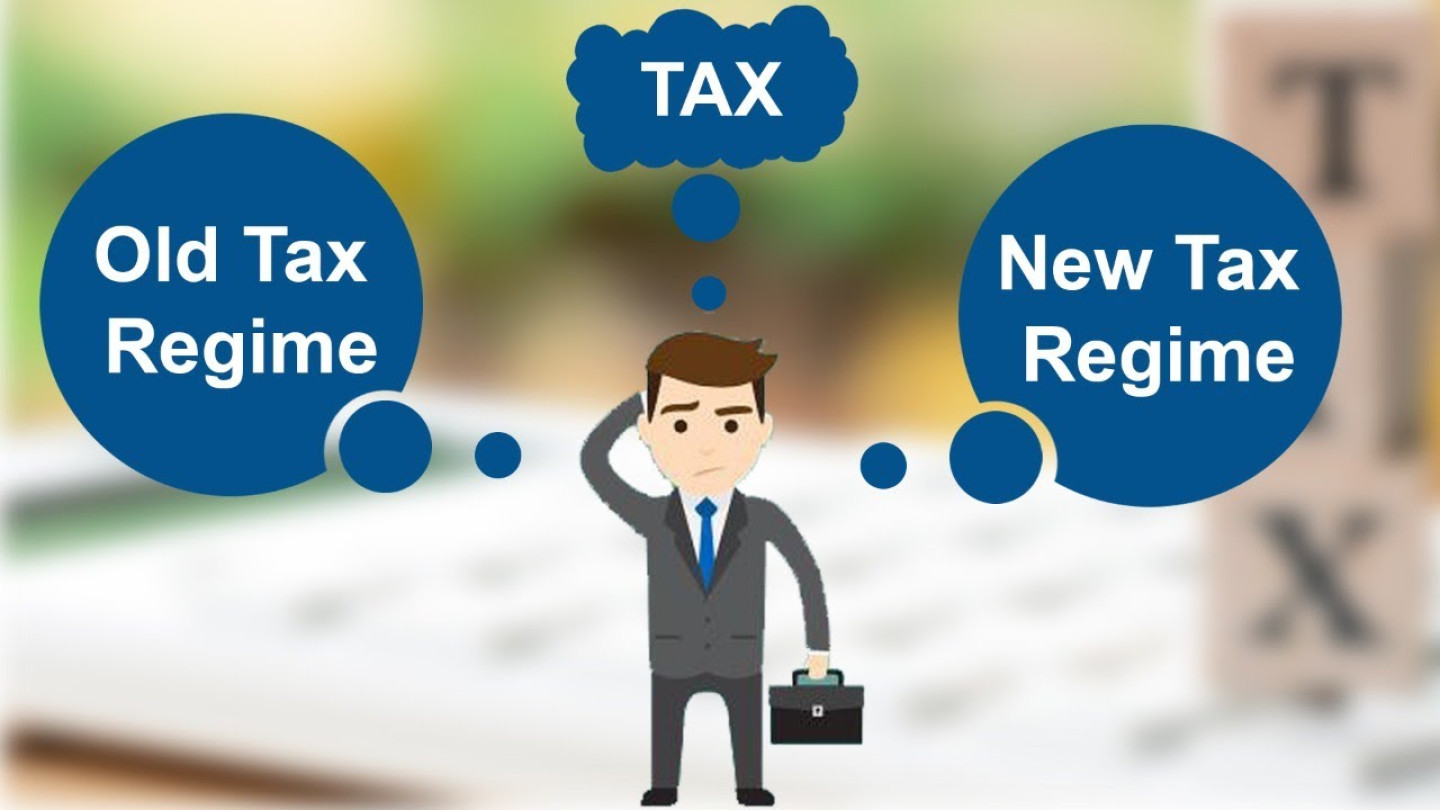
Which regime should I select? Difference between the old and new regimes of taxation?

It is that time of the year when employees of most companies start getting requests for declaring their tax-saving investments to their employers. But before doing so, you first need to choose whether you want to opt for the new tax regime or the old tax regime.

If you are confused about which tax regime to go for, here are two things that can help you make that decision.

  1. Consider The Slab Rates

The major difference between the old and the new tax regimes is the different slab rates.

Tax Slab(₹) Old Tax Rates New Tax Rates
0 – 2,50,000 0% 0%
2,50,000 – 5,00,000 5% 5%
5,00,000 – 7,50,000 20% 10%
7,50,000 – 10,00,000 20% 15%
10,00,000 – 12,50,000 30% 20%
12,50,000 – 15,00,000 30% 25%
15,00,000 & above 30% 30%

As you can see in the above table, there is no difference between the tax rates for individuals earning up to Rs 5 lakh per annum. The difference in the rates starts showing thereafter. The basic tax rate under both regimes again becomes the same for those earning above Rs 15 lakh per annum. Therefore, as compared to the old tax regime, the new tax regime for high-income earners is likely to make taxpayers pay a higher amount in the long run.

  1. Weigh The Benefits of Tax Deductions And Exemptions

While figuring out whether to choose the old or the new tax regime might look complicated, if you approach it in a systematic way, it is not that difficult to figure out. 

Here is what you need to do –

  1. Calculate all the exemptions that you are availing of: If you are living on rent, you would be claiming HRA which is the biggest salary exemption one enjoys. Apart from that, other tax-free components include LTA, Food Bill, Phone Bills, etc. All these will become taxable if you choose to shift to the new tax regime.
  2. Look at the deductions that you claim: As a salaried employee, two deductions that you automatically get are a standard deduction of Rs 50,000 and your contribution towards your Employee Provident Fund (EPF). In the new regime, you won’t be able to claim these deductions even though you will continue to contribute to EPF. Over and above, you cannot claim deductions against your home loan (if you have one) or insurance policies, which till now has helped to reduce your taxable income.

Now, combine these exemptions and deductions and minus them from your salary to see what is your taxable income and what it would be if you let go of these deductions. This should be the deciding factor for which regime you should go for.

Which one is better? 

Both systems have their own sets of pros and cons. The old system has many exemptions and deductions under numerous sections – availing a few of these required people to invest in tax-saving investment options, which helped inculcate a good habit of investing. On the other hand, the new system gives people more flexibility and tries to simplify the process. If you are someone who was claiming a lot of deductions under the old regime, you can probably save better sticking with the same system, as per the calculations. If you weren’t making any tax-saving investments or claiming any deductions earlier too, then maybe the new system may prove beneficial. It also varies based on which slab you are in as well. However, since the system is new, it makes sense to consult a competent tax expert who can suggest the optimal tax saving route for you.

Wealth Cafe Advice:

It is just not about taxes. A lot of time, as we have seen above, to save taxes one needs to make investments and those investments can dampen your cash flows. It could be possible that everyone is not able to save and invest their money because of financial responsibilities and other needs and hence, could select to opt for New Regime as that would make more sense from an overall financial situation for you.

All about Gratuity

Do you read your offer letter and see you have the benefit of gratuity but however when you see your salary slip, nothing is mentioned in it? In this article, we will understand all the aspects related to gratuity.

What is gratuity? 

After having served your employer for five years or more you become entitled to a payment called “gratuity". This is a lump-sum tax-free benefit that you are entitled to when you leave for another job or retire. The gratuity amount is totally paid by the employer without any contributions from the employee.


What are the eligibility criteria to receive gratuity?

Here is the list to check if an employee is eligible to receive the gratuity amount from the employer or not:

  • You should be eligible for superannuation
  • You should resign after working for five years with a single employer
  • You should retire from work
  • In case of any disability or pass away due to accident or illness


The formula for calculating gratuity

  1. Income tax department website- You can go to www.incometaxindia.gov.in website. Look for the 'Tax Tools' option. Now, search Gratuity from the available options. The given calculator will compute the amount of gratuity paid with respect to the input values such as assessment year, type of employer, gratuity received exempted gratuity and taxable gratuity.
  2. Check with your employer- Your employer or the HR of the organization keeps the complete information of all the employees. One can approach his or her HR regarding the gratuity balance or amount.    
  3. Formula to calculate gratuity yourself- The formula is 15 X (last drawn salary) X (tenure of working)/26. For instance, employee X's last drawn salary is 50,000 per month and has worked with ABC ltd company for about 30 years. So, his gratuity will be calculated as: (15 X 50,000 X 30)/26= Rs 9,37,500. In this formula, the time period of more than six months is considered as one year.

However, an employer can choose to pay more gratuity to an employee. Also, for the number of months in the last year of employment, anything above 6 months is rounded off to the next number while anything below 6 months in the last year of employment is rounded off to the previous lower number.

Income tax on gratuity

The taxation rules around gratuity amount primarily depend on whether an employee is employed with a government or a private entity.

  • For (central/ state/ local) government employees, the entire gratuity amount is exempted from income tax.
  • For private employees, the least of the following three amounts is exempted from income tax:
  1. a) The eligible gratuity
  2. b) The actual amount of gratuity received
  3. c) Rs. 20 lakh

FAQs on Gratuity

1. If I resign from a company after 4.5 years of service, am I eligible for gratuity?

No, you have to serve at least 5 years in a company to get gratuity payment. It is best to check with the HR of your company about this. However, if someone dies while in service, the gratuity amount will be paid to their legal heir even if they have not completed 5 years of service. In addition, the amount received by a nominee/heir will not be taxed.

2. I am a contract employee in a company. Will I get gratuity if I resign or retire after 5 years?
If you are on the company rolls and are considered an employee of the company, then you will receive gratuity. However, if you are under a contract that is separate from the company then the gratuity should come from the contractor and not the company.

3. Can I see gratuity in my salary slip? Is it included in my monthly salary?

Gratuity is a monetary benefit given by the employer, but not paid as part of the regular monthly salary nor is it included in your salary slip.

4. What kind of employees does the Gratuity Act, 1972 cover?
Payment of Gratuity Act, 1972, applies to employees of factories, mines, oilfields, plantations, ports, railway companies, shops, or other establishments related to them. All kinds of government jobs have also been included under the purview of this act. It is applicable in all states of India except Jammu and Kashmir.

5. Is there any difference in the calculation of gratuity for employees who are not covered under the Gratuity Act?
Even if you are not covered by the Gratuity Act, your employer may pay you gratuity. The calculation for this is: Gratuity = Average salary (basic + DA) * ½ * Number of service years. In this case, the service years are not rounded off to the next number. So if you have a service of 12 years and 10 months, you get gratuity for 12 years and not 13 years.

6. Is there a cap to the amount I can receive as gratuity?
Yes. A company cannot pay you more than Rs.10 lakh as gratuity, irrespective of the number of years you have completed. This limit is also applicable to gratuity you can receive from different employers during your lifetime. If your company wishes to pay you more money, they can title it under ex-gratia or bonus.

7. How do I nominate someone to receive my gratuity in case of my death?
To nominate one or more heirs for your gratuity amount, you need to fill in Form F when joining a company.

8. How many days will it take for the employer to remit the gratuity amount?
Usually, gratuity is released along with or just before/after your full and final settlement is done. The government mandates employers to pay the amount within 30 days. If there is any delay in payment, the employer has to pay simple interest on the amount from the due date until the date when payment is made.

9. How much time does an employer take to release the gratuity amount? As per government norms, an employer has to pay the gratuity amount within 30 days from the full and final settlement of the employee. If the deadline is missed, the employer will have to pay the gratuity amount plus interest incurred on it from the due date to the actual payment date.

How do tax deductions help you save taxes? - An example - Part 2

In the last article, we saw how Rocket Singh claimed tax deductions under various components of his salary structure. If you have not checked that article yet, please read it before proceeding further - Click here.


Income tax deductions help individuals lower their taxable income and ultimately reduce their tax liability in a given financial year. Put simply, income tax deductions are investments made during a financial year that is offset against the gross annual income when filing income tax returns

Now that Rocket Singh has claimed all the deductions available for him under various allowances he is now eager to reduce it further:

Income Tax Calculation
Tax Deduction (INR) Explanation/reasoning
a) Annual Income 12,00,000
b) Tax deduction from salary slip -3,76,000 Refer to part 1 
f) Standard Deduction -50,000 It is usually deducted from the gross salary and is claimed as an exemption without having to show any proof of expenses. Hence, this flat amount of INR 50,000 is deducted from the gross salary
g) Section 80C (EPF +ELSS Mutual fund) -1,50,000 It allows taxpayers to make certain investments and claim tax deductions of up to Rs 1.5 lakh in a financial year. Read here - to know more.
h) Section 80D (Health Insurance) -50,000 It provides income tax deductions related to the medical insurance premium paid for yourself, your spouse, your parents, and your dependent children.
e) Section 80CCD (NPS) -50,000 It relates to the deductions available against contributions made to the National Pension Scheme (NPS) or the Atal Pension Yojana (APY).
f) Total (Deduction & Exemption) 7,26,000
Net Taxable Income (a-f) ₹ 5,24,000

As his taxable income is now INR 5,24,000, he falls under the slab of 5 lakhs - 7.5 lakhs of income tax. Thus he now has to pay a tax of INR 1500 only each month whereas he had to pay INR 15,000 in the beginning as his taxable income as per CTC was INR 12,00,000.

Knowing all this will help you understand what exactly is a taxable income, how your income is taxed, and with careful planning, how you can save on your taxable income.

However, it is essential to declare all the investments at the beginning of the assessment year so that the tax to be paid can be calculated properly.


Further to know more about rocket singh’s journey and how he reduced his tax liability - check our course- Understanding CTC and Salary Structure.

What is the tax liability after considering tax deductions from salary slips? - An example - Part 1

One of the biggest reasons why many salaried individuals struggle with income tax calculation is their inability to understand salary components and structure properly. The net CTC offered to you by your employer has several tax-saving components, and to take maximum advantage of these components, you must have a proper understanding of your salary structure.

But before knowing how to calculate the income from salary, you should first check your CTC to understand the taxability of various components. All the components would be classified into 3 categories - Taxable, Potentially taxable and Fully Exempt from tax. -.

For instance, let us take the example of Rocket Singh who earns INR 12 lakh annually. 

In this case:

  • Fully taxable allowance includes: Basic salary & special allowance
  • Potentially taxable allowance includes: House Rent Allowance (HRA) & Leave Travel Allowance (LTA)
  • Fully Exempt allowance includes: Food Allowance & Telephone Allowance

(If you want to know more about allowance in detail: read here)


Now that we know the taxability of the components of his salary structure, let's understand how he can reduce his tax liability by claiming maximum benefits from his CTC


Income Tax Calculation (Old vs. New Tax Regime)
Deduction & Exemption (INR) Explanation
a) Annual Income 12,00,000
b) HRA       -3,00,000 Actual HRA is INR 3,00,000 annually 

50% of Basic in INR 3,00,000 annually

Actual Rent Paid - 10% of Basic is INR 4,14,000 annually (INR 4,20,000 - INR 6,000) 

Therefore, INR 3,00,000 is the lowest and hence it is used for tax exemption 

To read more about HRA - click here

c) Leave Travel Allowance         -28,000 Mr. Rocket Singh had travelled  to Jammu along with his family this year. The total cost of the flight that he incurred was INR 28,000.  Therefore he can claim an exemption for the same as it was the shortest distance to the destination.  

To read more about LTA - click here

d) Food Allowance             -24,000 Meal Coupons like Sodexo or Ticket are tax-free subject to Rs 50 per meal and 2 meals per day. On a calculation of 20 working days, a month, and 2 meals per day, a sum of Rs 24,000 can be availed as a deduction by Rocket Singh annually.
e) Telephone Reimbursement             - 24,000 As a thumb rule, official expenses on telephones, including mobile phones paid by the employer on behalf of the employee, are not taxable.
f) Total  3,76,000
Net Taxable Income (a-f) 8,24,000


The Taxable income is now reduced from INR 12,00,000 to INR 8,24,000 but this is not the end. You can further reduce the taxable income by deducting the standard deduction and by claiming other tax deductions available to you under chapter VI. You can read more about these deductions here.


Further to know more about rocket singh’s journey and how he reduced his tax liability - check our course- Understanding CTC and Salary Structure.

We have also discussed in brief part 2 of this article where we discuss more about tax deductions - you can check it here

Budget 2022 Highlights - Brief inputs for you

The much-awaited Union Budget was at last announced yesterday, i.e on 1st Feb 2022. In comparison to the last 4 budget announcements made by our finance minister, this was the shortest of all. In her 90-minute speech, Nirmala Sitharaman announced various measures through the Union Budget 2022.


Before knowing various measures, it is very important to understand what the budget means.

I am pretty sure that you might have a budget for your income i.e a track of your income and expenses and plan your month accordingly (If not, you need to start it right now before it is too late). Similarly, our country too has a budget. On this day, our finance minister shares the following :

  1. Ways and means to raise the revenue of our country
  2. Estimates of the expenditure in upcoming fiscal
  3. The economic and financial policy of the coming year.

Not only this, the budget contains data of 3 fiscal years:

  1. The actual number of previous fiscal year
  2. The revised number of current fiscal year
  3. Estimates of next fiscal year


Now let us discuss the top 10 highlights made by the Indian Finance Minister that you should know of: 

  1. Changes for income taxpayers

The Union Budget did not announce any new changes in tax slabs for the personal income tax category. It was highly expected that some incremental changes would be introduced to the current income tax regime, but no significant change was announced. You can read more about it here 

If you missed sharing certain tax information while filing ITR, then you can do the same by revising within 2 years from the end of the relevant assessment year. Rest details will be updated soon.

The parents or guardians can take insurance from their children with disabilities. The payment of the annuity or lump sum for the disabled dependent will be exempted during the lifetime.

  1. Central Bank’s Digital Currency Introduced

The Reserve Bank of India will introduce the digital rupee in the 2022-2023 financial year which begins on Apr. 1.

“Introduction of Central Bank Digital Currency will give a big boost to the digital economy. Digital currency will also lead to a more efficient and cheaper currency management system,” she said.

“It is, therefore, proposed to introduce Digital Rupee, using blockchain and other technologies, to be issued by the Reserve Bank of India starting 2022-23,” she added.

  1. Digital Assets will be taxed at 30% whereas 1% TDS will be levied on payments made on transfer of digital assets - Read here
  2. The post office will now be online

All 1.5 lakh post offices in India will be connected to the core banking system that will enable people to access their accounts online and also transfer money within post office accounts and to other banks, Nirmala Sitharaman said.

Something we have personally been rooting for, if you have a PPF account or an MIS account with the post office, you would know this is a great move and much-needed move.

  1. E-passports for you

E-passports to be rolled out in 2022-23. The passport jacket will contain an electronic chip that will have important security-related data encoded on it.

In case, anyone tampers with the chip, the system shall be able to identify it, resulting in the failure of the passport authentication.

I have personally been waiting for an e-passport. Long overdue. If they are able to get it rolling, keep security in place. This would be exciting.

  1. The government is going green

Sustainable Development is at the core of India’s Development Strategy. The minister announced ₹19,500 crores for Production Linked Incentive for the manufacture of high-efficiency solar modules. 

She also announced sovereign Green Bonds under the government’s overall market borrowings in 2022-23, which will be used to mobilize resources for green or climate-friendly infrastructure. Green Bonds will serve as a transformative step in that direction. 

A green bond is a fixed-income investment used to finance environmental and sustainable projects. Green bonds can be issued by governments, organizations and companies. These bonds can help fund renewable energy (such as wind, solar and hydro), recycling efforts, clean transportation and sustainable forestry.

India has the second-largest Green Bond market in the world and has immense untapped potential. With the recent announcements during the Budget Session, the size and penetration of the Green Bond market are expected to go up.  However, don't go jumping to invest in them, let us share more information on it soon.

7. Centre to formulate battery swapping policy for electric vehicles

In order to scale, promote and use electric vehicles in the country, a policy was announced for the battery as a service or battery swapping that is being prepared and deployed.

During the speech she said, for setting up battery stations at a mass level a battery swapping policy will be brought and interoperability standards will be formulated. With this, private players will be encouraged to develop sustainable and innovative models for the battery as a service which will increase efficiency in the electric vehicle ecosystem.

  1. National Tele Mental Health Program

The National Tele Mental Health programme will include a network of 23 Tele mental health centres of excellence. Nimhans is the nodal centre and IIIT Bangalore will provide technological support for the mental health programme.

Where Mental health becomes a part of the budget, we know the efforts are reaching the centre and will help spread the right message across. Again a great move.

  1. Education

The education sector is among one of the worst-hit sectors in the Covid-19 pandemic as schools remained closed for nearly two years. Classes were shifted online to adopt alternative ways, making it difficult for many to find the means and infrastructure for remote learning.  Following are the initiatives are taken by the government:

  • Govt to expand ‘one class, one TV channel’ from 12 to 200 channels. This expansion has been done in order to enable states to offer supplementary education in regional languages for Classes 1 to 12. 
  • 2 lakh anganwadis to be upgraded for improving child health
  • Digital university to set up for online education focusing on ICT using the hub and spoke model
  • Select ITIs in all states that will offer skilling courses
  1. Other Policies
  • The budget had an explicit focus on what the finance minister called “Amrut Kaal” which refers to the next 25 years that will take us towards celebrating 100 years of Indian Independence. And the government believes that this budget should lay the groundwork to propel India on to a path of sustained prosperity.
  • Recognizing the importance of 'Nari Shakti', she said three schemes were launched to provide integrated development for women and children.
  • Defence R&D to be opened for industry and startups.

I hope this was helpful and simplified Budget 2022 for you.

Cryptocurrency Taxation in India – Budget 2022

India has finally introduced a capital gains tax on crypto gains!  You’ve probably seen it already. News media is talking about it. Twitter is going bonkers over this story.

During Budget 2022, the finance minister made a big announcement that virtual digital assets including cryptocurrencies will be taxed from 1st April 2022. 

Yes, it’s big news! Not just this, there was no negative impact on the prices of most of the popular crypto tokens including Bitcoin, ETH, WRX, SOL, ADA, DOGE, MATIC listed on Indian exchanges.


Now let us understand what exactly are virtual digital assets?

The definition of digital assets as per the Budget 2022 is as below:

“Any information or code or number or token (not being Indian currency or foreign currency), generated through cryptographic means or otherwise, by whatever name called, providing a digital representation of value exchanged with or without consideration, with the promise or representation of having inherent value, or functions as a store of value or a unit of account including its use in any financial transaction or investment, but not limited to investment scheme; and can be transferred, stored or traded electronically;“.

Basically virtual digital assets include private cryptocurrencies, DeFi (decentralized finance), and non-fungible tokens (NFTs). Prima facie, excludes digital gold, central bank digital currency (CBDC), or any other traditional digital assets.


Crypto taxation rules:

  1. A flat rate of 30% will be levied on the income from virtual digital assets regardless of the tax slab
  2. Indexation of the gains is not allowed.
  3. The gifting of crypto tokens and virtual assets would be taxed at the hands of the recipient at the same rate. No recipient will be excluded from taxation.
  4. In order to tax crypto transactions, a 1% TDS will be levied. Our understanding is that this 1% is within the overall 30% tax. The monetary threshold above which the TDS is applicable will be intimated later.
  5. Can set off crypto losses in the same year with crypto gains
  6. Losses or gains arising from digital virtual assets cannot be set off with any other gains
  7. Losses cannot be carried forward

So if you’ve made two transactions during the financial year 2022-23, one where you turn a profit of INR 1000 and one where you lose INR 700 in virtual digital assets. Then the government will only tax the net again. In this case, INR 300 i.e. INR 1000 - INR 700. 

However, with cryptos,  you won’t be able to offset losses using gains made via the sale of other assets — stocks for instance, nor can you carry forward the loss next financial year i.e 2023-24 to set off it with net tax.

Overall, the government has neither legalised nor banned cryptocurrencies. But it’s made a move to discourage short-term trading, at least.


    Get your weekly dose of Money Masala from us.


    Income-tax Rates FY 2022-23 (AY 2023-24)

    Before knowing the tax rates, it is very important to understand the terms Financial year (FY) and Assessment Year (AY).

    The below-mentioned tax rates/ slab is on the income earned for the period 1 April 2022 to 31 March 2023. FY stands for the ‘financial year’ which is from 1 April 2022 to 31 March 2023. AY stands for Assessment year which is 1 April 2023 to 31 March 24.

    For individuals, the due date to file the income tax return for the income earned from 1 April 2022 to 31 March 2023 is 31 July 2023. 

    However, considering the current updates available after the Finance Minister’s speech, there is no change in tax slabs. Therefore, the tax rates remain unchanged.

    Income tax Rates 

    1. Income Tax Rate & Slab for Individuals & HUF:

    1a. Individual (Resident or Resident but not Ordinarily Resident or non-resident), who is of the age of less than 60 years on the last day of the relevant previous year & for HUF:


    Taxable income Tax Rate

    (Existing Scheme)

    Tax Rate

    (New Scheme)

    Up to Rs. 2,50,000 NIL NIL
    Rs. 2,50,001 to Rs. 5,00,000 5%  5% 
    Rs. 5,00,001 to Rs. 7,50,000 20% 20%
    Rs. 7,50,001 to Rs. 10,00,000 20% 15%
    Rs. 10,00,001 to Rs. 12,50,000 30% 20%
    Rs. 12,50,001 to Rs. 15,00,000 30% 25%
    Above Rs. 15,00,000 30% 30%

     1b. Resident or Resident but not Ordinarily Resident senior citizen, i.e., every individual, being a resident or Resident but not Ordinarily Resident in India, who is of the age of 60 years or more but less than 80 years at any time during the previous year:

    Taxable income Tax Rate

    (Existing Scheme)

    Tax Rate

    (New Scheme)

    Up to Rs. 2,50,000 Nil Nil
    Rs. 2,50,001 to Rs. 3,00,000 Nil 5%
    Rs. 3,00,001 to Rs. 5,00,000 5% 5%
    Rs. 5,00,001 to Rs. 7,50,000 20%  10%
    Rs. 7,50,001 to Rs. 10,00,000 20%  15%
    Rs. 10,00,001 to Rs. 12,50,000 30%  20%
    Rs. 12,50,001 to Rs. 15,00,000 30%  25%
    Above Rs. 15,00,000 30%  30%

     1c. Resident or Resident but not Ordinarily Resident super senior citizen, i.e., every individual, being a resident or Resident but not Ordinarily Resident in India, who is of the age of 80 years or more at any time during the previous year:


    Taxable income Tax Rate

    (Existing Scheme)

    Tax Rate

    (New Scheme)

    Up to Rs. 2,50,000 Nil NIL
    Rs. 2,50,001 to Rs. 5,00,000 Nil 5%
    Rs. 5,00,001 to Rs. 7,50,000 20% 10%
    Rs. 7,50,001 to Rs. 10,00,000 20% 15%
    Rs. 10,00,001 to Rs. 12,50,000 30% 20%
    Rs. 12,50,001 to Rs. 15,00,000 30% 25%
    Above Rs. 15,00,000 30% 30%


    Surcharge:
    a) 10% of Income-tax where total income exceeds Rs.50 lakh
    b) 15% of Income-tax where total income exceeds Rs.1 crore
    c) 25% of Income-tax where total income exceeds Rs.2 crore
    d) 37% of Income-tax where total income exceeds Rs.5 crore

    Note: The enhanced surcharge of 25% & 37%, as the case may be, is not levied, from income chargeable to tax under sections 111A, 112A, and 115AD. Hence, the maximum rate of surcharge on tax payable on such incomes shall be 15%.

    Education cess: 4% of income tax plus surcharge

    Note: A resident or Resident but not an Ordinarily Resident individual is entitled to a rebate under section 87A if his total income does not exceed Rs. 5, 00,000. The amount of rebate shall be 100% of income tax or Rs. 12,500, whichever is less. rebate under section 87A is available in both schemes I.e. existing scheme as well as the new scheme.

    2. Income Tax Rates for AOP/BOI/Any other Artificial Juridical Person:

    Taxable income Tax Rate
    Up to Rs. 2,50,000 Nil
    Rs. 2,50,001 to Rs. 5,00,000 5%
    Rs. 5,00,001 to Rs. 10,00,000 20%
    Above Rs. 10,00,000 30%

    Surcharge:

    1. a) 10% of Income-tax where total income exceeds Rs.50 lakh
    2. b) 15% of Income-tax where total income exceeds Rs.1 crore
    3. c) 25% of Income-tax where total income exceeds Rs.2 crore
    4. d) 37% of Income-tax where total income exceeds Rs.5 crore

    Note: Enhanced Surcharge rate (25% or 37%) is not applicable in case of specified incomes I.e. short-term capital gain u/s 111A, long-term capital gain u/s 112A & short-term or long-term capital gain u/s 115AD(1)(b).

    Education cess: 4% of tax plus surcharge


    3. Tax Rate for Partnership Firms:

    A partnership firm (including LLP) is taxable at 30%.

    Surcharge: 12% of Income-tax where total income exceeds Rs. 1 crore

    Education cess: 4% of Income-tax plus surcharge


    3a. Income Tax Slab Rate for Local Authority:

    A local authority is Income taxable at 30%.

    Surcharge: 12% of Income-tax where total income exceeds Rs. 1 crore

    Education cess: 4% of tax plus surcharge


    3b. Tax Slab Rate for Domestic Companies:

    A domestic company is taxable at 30%. However, the tax rate is 25% if turnover or gross receipt of the company does not exceed Rs. 400 crore in the previous year.

    Particulars Tax Rate(%)
    If turnover or gross receipt of the company does not exceed Rs. 400 crore in the previous year 2019-20 25%
    If the company opted for section 115 BA (Note 1) 25%
    If the company opted for section 115 BAA (Note 2) 22%
    If the company opted for section 115 BAB (Note 3) 15%
    Any other domestic company 30%


    Note 1: Section 115BA – A domestic company which is registered on or after March 1, 2016, and engaged in the business of manufacture or production of any article or thing and research in relation to (or distribution of) such article or thing manufactured or produced by it and also It is not claiming any deduction u/s 10AA, 32AC, 32AD, 33AB, 33ABA, 35(1)(ii)/(iia)/(iii)/35(2AA)/(2AB), 35AC, 35AD, 35CCC, 35CCD, section 80H to 80TT (Other than 80JJAA) or additional depreciation, can opt section 115BA on or before the due date of return by filing Form 10-IB online. The company cannot claim any brought-forward losses (if such loss is related to the deductions specified in the above point).

    Note 2: Section 115 BAA – Total income of a company is taxable at the rate of 22% (from A.Y 2020-21) if the following conditions are satisfied:

    – Company is not claiming any deduction u/s 10AA or 32(1)(iia) or 32AD or 33AB or 33ABA or 35(1)(ii)/(iia)/(iii)/35(2AA)/(2AB) or 35AD or 35CCC or 35CCD or section 80H to 80TT (Other than 80JJAA).

    – The Company is not claiming any brought forward losses (if such loss is related to the deductions specified in the above point).

    – Provisions of MAT are not applicable to such companies after exercising their option. The company cannot claim the MAT credit (if any is available at the time of exercising section 115 BAA).

    Note 3: Section 115 BAB – Total income of a company is taxable at the rate of 15% (from A.Y 2020-21) if the following conditions are satisfied:

    – Company (not covered in section 115BA and 115BAA) is registered on or after October 1, 2019, and commenced manufacturing on or before 31st March 2023.

    – Company is not formed by splitting up or reconstructing a business already in existence.

    – Company does not use any machinery or plant previously used for any purpose.

    – Company does not use any building previously used as a hotel or a convention center, as the case may be.

    – The company is not engaged in any business other than the business of manufacture or production of any article or thing and research in relation to (or distribution of) such article or thing manufactured or produced by it. Business of manufacture or production shall not include the business of –

    • Development of computer software;
    • Mining;
    • Conversion of marble blocks or similar items into slabs;
    • Bottling of gas into the cylinder;
    • Printing of books or production of the cinematographic film; or
    • Any other notified by Central Govt.

    – Company is not claiming any deduction u/s 10AA or 32(1)(iia) or 32AD or 33AB or 33ABA or 35(1)(ii)/(iia)/(iii)/35(2AA)/(2AB) or 35AD or 35CCC or 35CCD or section 80H to 80TT (Other than 80JJAA and 80M).

    – The Company is not claiming any brought forward losses (if such loss is related to the deductions specified in the above point).

    – Provisions of MAT are not applicable to such companies after exercising their option. The company cannot claim the MAT credit (if any is available at the time of exercising section 115 BAA).

    Surcharge:

    1. a) 7% of Income-tax where total income exceeds Rs.1 crore
    2. b) 12% of Income-tax where total income exceeds Rs.10 crore
    3. c) 10% of income tax where domestic company opted for section 115 BAA and 115 BAB

    Education cess: 4% of Income-tax plus surcharge.


     4. Tax Rates for Foreign Companies:

    A foreign company is taxable at 40%

    Surcharge: 

    1. a) 2% of Income-tax where total income exceeds Rs. 1 crore
    2. b) 5% of Income-tax where total income exceeds Rs. 10 crore

    Education cess: 4% of Income-tax plus surcharge.

    5. Income Tax Slab for Co-operative Society

    Taxable income Tax Rate

    (Existing Scheme)

    Tax Rate

    (New Scheme)

    Up to Rs. 10,000 10%
    Rs. 10,001 to Rs. 20,000 20% 22%
    Above Rs. 20,000 30%


    Surcharge:

    1. a) 12% of Income-tax where total income exceeds Rs. 1 crore
    2. b) In the case of the Concessional scheme, the surcharge rate is 10%

    Education cess: 4% of Income-tax plus surcharge.


    Income Tax rates of last 5 years:

    Income Tax Rate FY 2016 - 17 (AY 2017-18)

    Income Tax Slab Rate & Deductions - FY 2017-18 (AY 2018-19)

    Income-tax Rates FY 2019-20 (AY 2020-21)

    Income-tax Rates FY 2020-21 (AY 2021-22)

    Income-tax Rates FY 2021-22 (AY 2022-23)

    Disclaimer: – The articles are for information purposes only. Information presented is general information that does not take into account your individual circumstances, financial situation, or needs, nor does it present a personalized recommendation to you. You must consult a financial advisor who understands your specific circumstances and situation before taking an investment decision.

    What is Cost Averaging?

    In a marathon, participants are advised to go easy on sudden bursts of high speed during the race, especially at the beginning. This may sound confusing. How can one win such a long distance without speed? However, running at full speed would be pointless if the participant loses stamina mid-way. 

    Similarly, investors gain when they are steady and consistent even in volatile situations instead of looking at high-speed sprints. We all have heard that one should buy more when the market is low and reap profit when the market is high. However, with limited time, resources, information, and skillset it gets very difficult to time the market and actually buy and sell with every dip. In fact, there are costs such as brokerage, taxes, and STT involved when you buy and sell with every small change. These costs would eat into your profits. So what is the easiest way to make use of the saying and buy more when markets are at a low and less when markets are at a high? 

     SIP (Systematic Investment Plan) is one of the best modes to invest in such a situation. Let us understand this better with an example.

    What is cost averaging? 

    The concept of cost averaging lies in averaging out the cost at which you buy units of a Mutual Fund. it guides the investor to - buy- low and sell- high’. However, at times an investor ends up doing just the opposite. By investing on a fixed schedule, you avoid timing the market and figuring out the exact best time to invest. Cost averaging helps you to take advantage of market volatility. 

    How does SIP help with averaging?

    Take a look at the following table to understand the concept better:

    Date NAV Unit Amt
    Dec-19 524.64 9.530345 5000
    Jan-20 525.27 9.518914 5000
    Feb-20 509.31 9.817204 5000
    Mar-20 468.77 10.66621 5000
    Apr-20 348.51 14.34679 5000
    May-20 409.96 12.19631 5000
    Jun-20 405.4 12.3335 5000
    Jul-20 429.29 11.64714 5000
    Aug-20 446.72 11.19269 5000
    Sep-20 467.35 10.69862 5000
    Oct-20 449.9 11.11358 5000
    Nov-20 455.46 10.97791 5000
    Dec-20 522.39 9.571393 5000
    Jan-21 560.57 8.919493 5000

    Total Investment: INR 70,000

    Total Number  of Units: INR 153

    Profit: INR 15,504


    If the same amount i.e INR 70,000 was invested by lump sum route in December 2019, one would have earned a profit of only INR 4,794 in Jan 2021.

    In the above example, we can see that SIP helps us to reap more profit in comparison to lump sum due to cost averaging. We often hear people saying buy more when the market is down, but one cannot time the market and invest according to it. 


    You can refer to the following articles to know more about SIPs: 

    SIP Impact: Well Illustrated

    Timing the market for your SIP investments?

    Should I pause/stop my SIP?


    Wealthcafe Advice:

    We recommend you invest based on your asset allocation. As said earlier, one cannot time the market, however asset allocation will help you to buy and sell accordingly. If the ratio of equity: debt changes by 10%  it is time to revisit and rebalance your portfolio. This will help you to buy- low and sell- high. You can read this article - How am I investing in current times - Akruti Agarwal- to understand how asset allocation helped me to earn profit during a pandemic situation. 


      Get your weekly dose of Money Masala from us.


      Fully Exempted Allowances

      An Allowance is a financial advantage given to employees on top of the regular salary. Allowances are considered to be part of the salary structure in Indian Payroll. Based on the tax behaviors, allowances are divided into three categories; Taxable, Non-taxable, and Partially Taxable allowances.

      The allowances given to an employee which form a part of their salary but are fully exempted from tax are called non-taxable allowance.

      The following allowances are fully exempted for all employees:

      1. Uniform allowance

      An allowance that has been provided for the purchase or maintenance of a uniform that is to be used during duty in the office is called a uniform allowance. This allowance could be availed only for the specific uniform stated by the organization. Generally, it is not significant to embellish details of such expenses incurred unless the expense is not commensurate with the salary. In most cases, it is not required to keep proof of documents as a simple declaration meets the requirement.

      2. Academic and Research Allowance

      Allowance endowed for the reason of promoting academic and research-related training, education, or professional duties is known as academic or research allowance.

      3. Travelling Allowance

      Any allowance provided to meet the charges of travel on tour or the transfer of duty is called travelling allowances. Allowances about the cost of travel on transfer include any amount paid to transfer, packaging, and transportation of such transfer.

      4. Helper Allowance

      In certain peculiar cases, the employer might allow the employee to recruit a helper for performing his official duties. In such cases, a helper allowance is granted.

      5. Daily Allowance

      Daily allowance is provided to employees to meet the daily expenses incurred when on tour or for the period of a transfer in the job. This type of allowance is bestowed when the employee is not in the usual place of duty.

      6 . Conveyance Allowance 

      Allowance for conveyance is provided to employees to compensate them for the cost incurred while travelling for official duties. However, the employer doesn’t get paid for the commute from home to work as it is not considered an official duty. The allowance for travel from home to work is treated under another section of allowance termed as ‘Transport allowance’, which isn’t exempt from tax.

      The following allowances are fully exempted for certain employees only

      1. Allowances Paid to Government Employees Abroad

      When servants of the Indian Government travel abroad for assignments they receive an allowance to carry out their expenditure in another country. These allowances are exempted from tax liability.

      2. Allowances Paid to UNO Employees

      The allowances received by UNO employees are free from tax liability.

      3. Allowances Paid to Judges of HC & SC

      Judges of the  High court and Supreme Court get allowances that are exempt from tax. These allowances are known as sumptuary allowances.

      4. Compensatory Allowances

      The compensatory allowances received by Judges of the High Court and Supreme court are also exempted from tax as per the Income Tax Act.

      To know  more about Benefits available to government employees - Read here


      Note: These non-taxable allowances can become taxable if the amount is received but not spent by the employee.


        Get your weekly dose of Money Masala from us.


        [mc4wp_form id="2150"]

        WCafe Financial Services Pvt Ltd (formerly known as Wealth Cafe Financial Services Pvt Ltd) is a AMFI registered ARN holder with ARN-78274.

        WCafe Financial Services Pvt Ltd (formerly known as Wealth Cafe Financial Services Pvt Ltd) is a SEBI registered Authorised Person (sub broker) of Sharekhan Limited with NSE Regn AP2069583763 and BSE Regn AP01074801170742.

        Copyright 2010-20 Wealth Café ©  All Rights Reserved